Last updated November 22, 2026
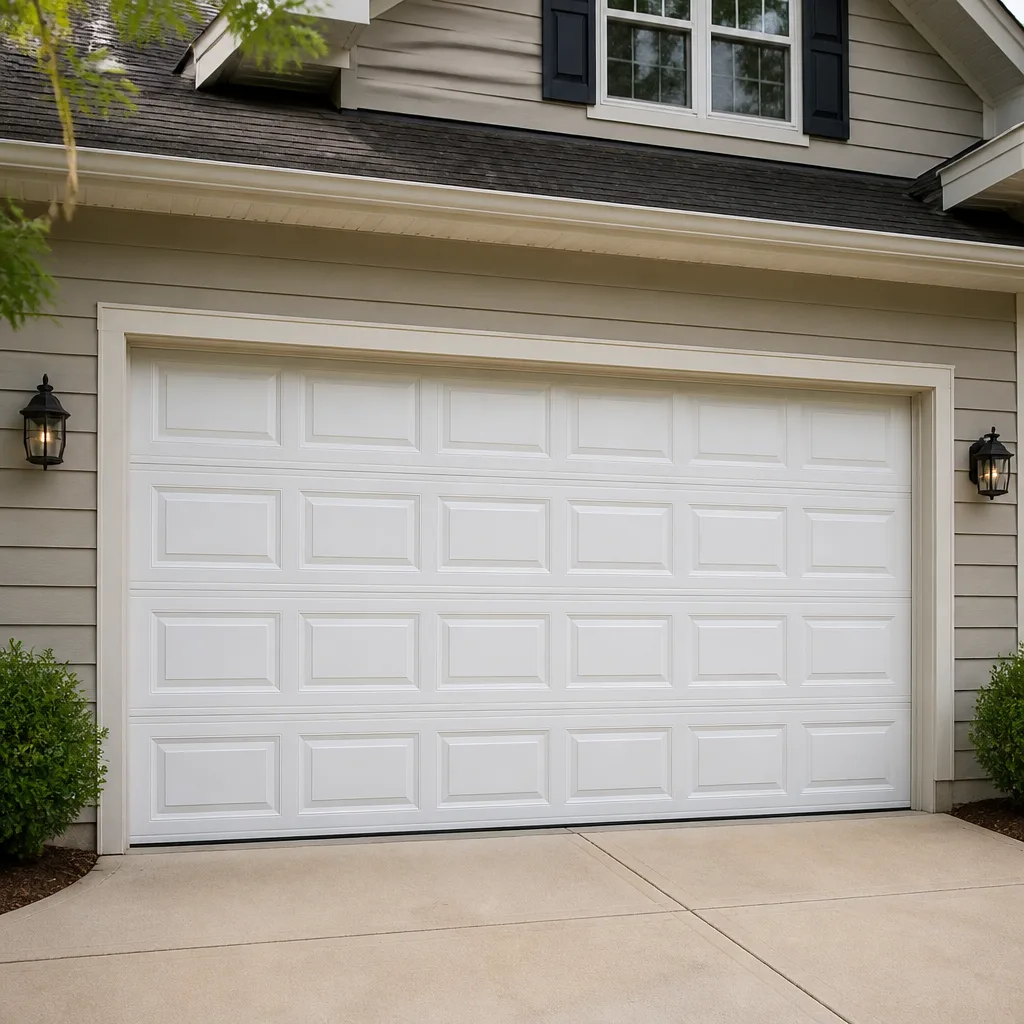 Raised-panel steel
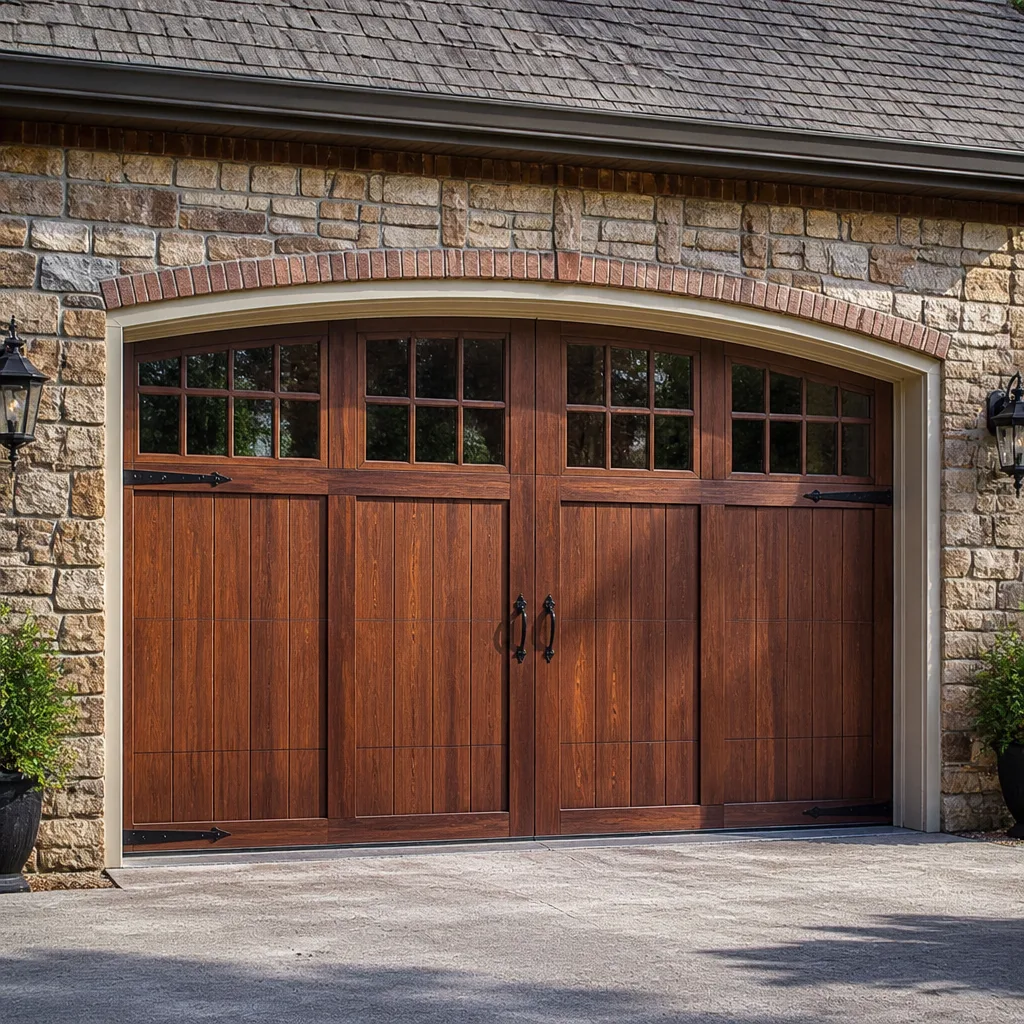 Carriage house
 Modern flush
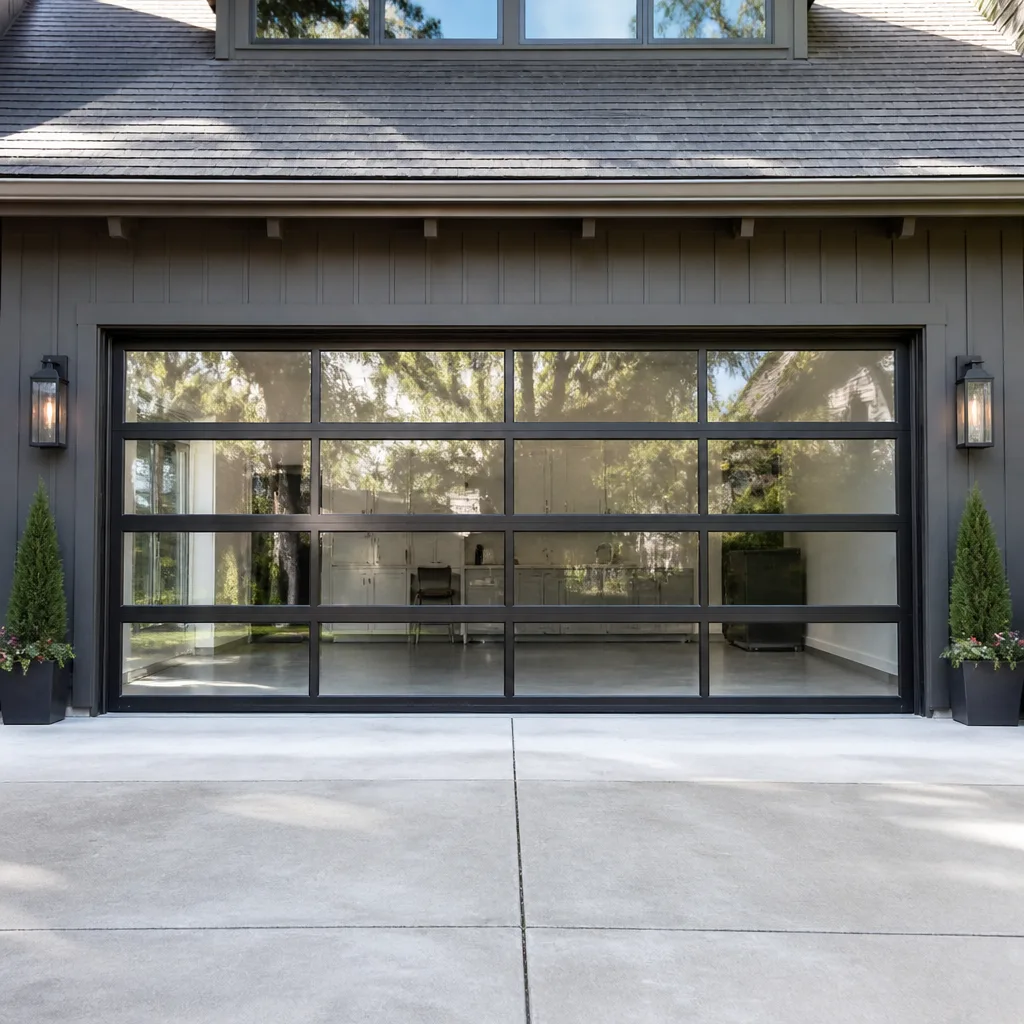 Full-view glass
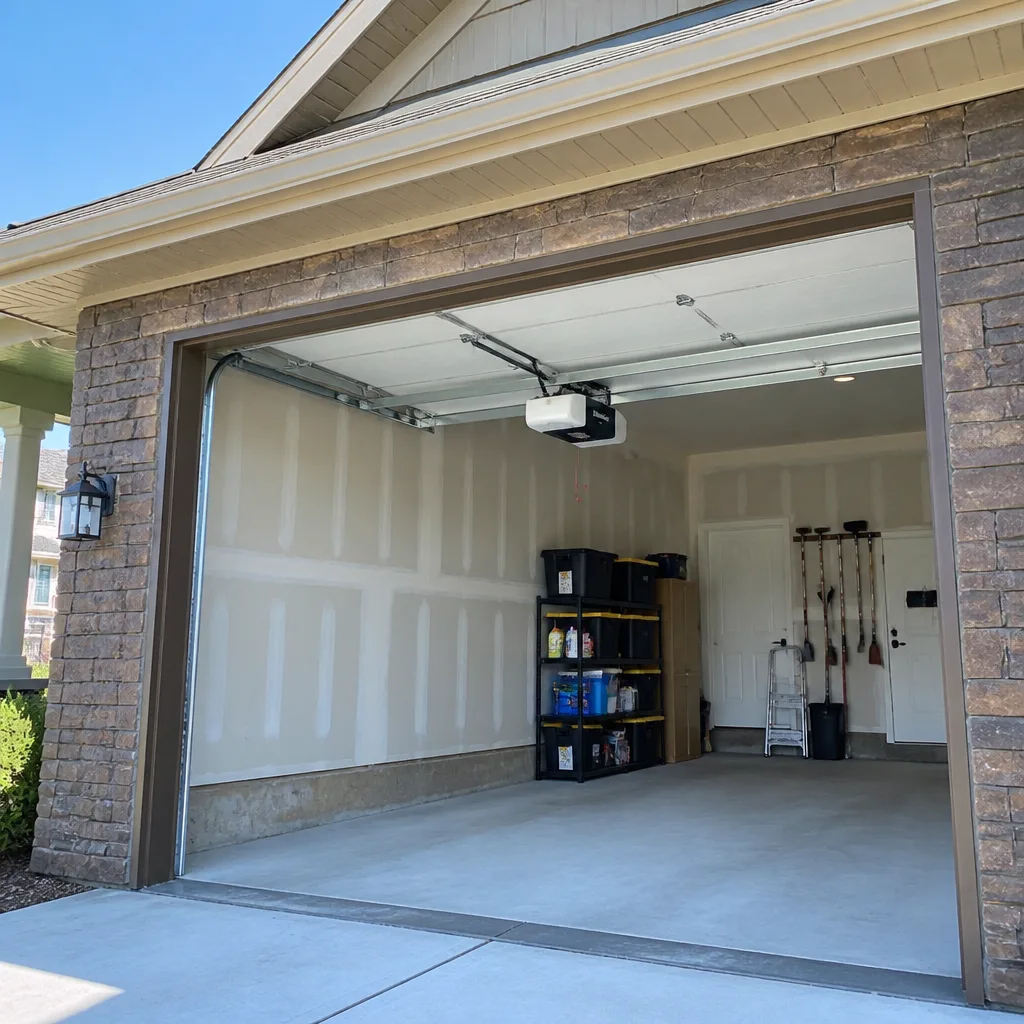 LiftMaster openers
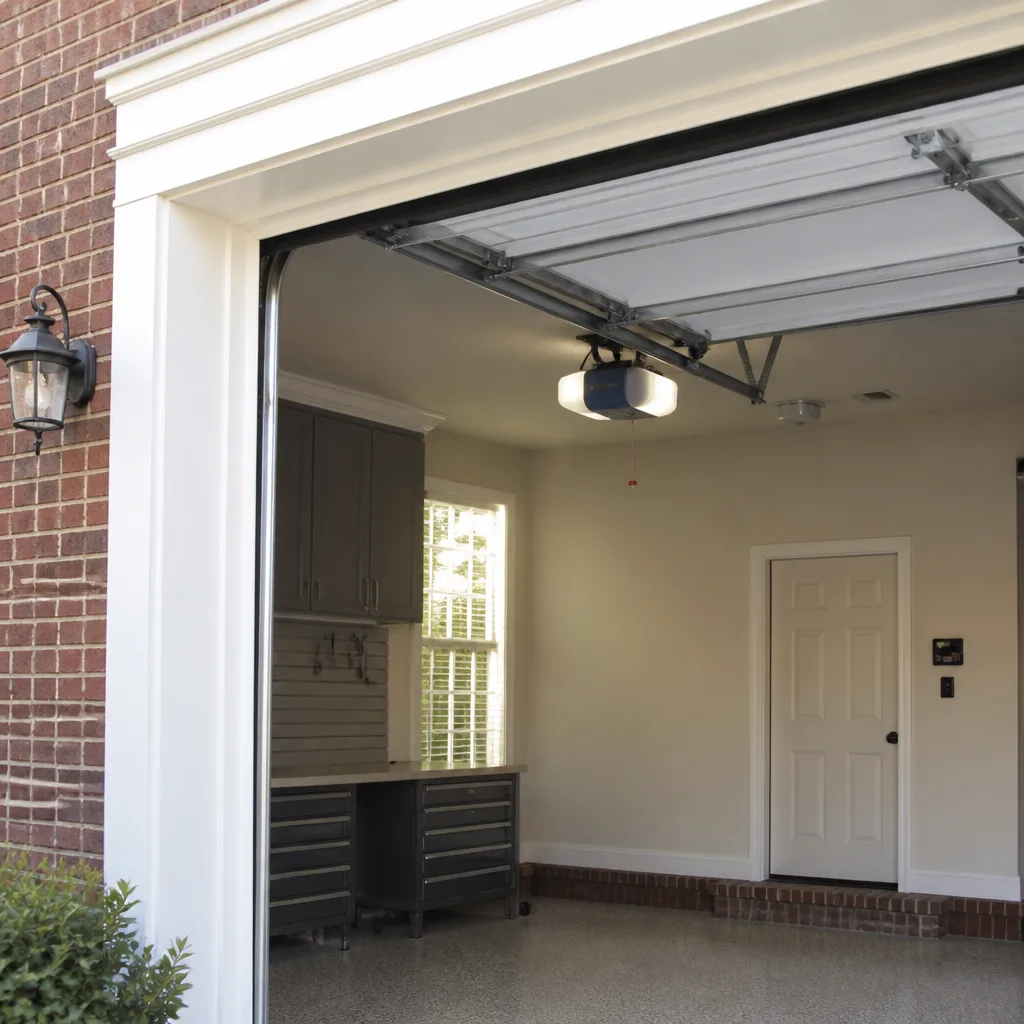 Chamberlain openers
Full 25-point door and opener safety check with every visit - springs, cables, rollers, tracks, and your LiftMaster or Chamberlain opener included
You get a price before we start. It does not change when the pro arrives.
Get your free estimateGarage Door Repair Maintenance Checklist for Newport News Homeowners
Here is the counterintuitive part most checklists get wrong: a garage door usually fails not because it got old, but because the hardware sat unlubricated while the seasons changed. In Newport News, that story plays out with a local twist. Weeks of humid summer air work their way into the moving parts, a little surface rust starts on the springs and hinges, and the door keeps running anyway, right up until the morning it doesn’t. The gap isn’t laziness. It’s that nobody told the homeowner what to look for or which checks are safe to do solo.
This guide closes the gap. You’ll get a maintenance checklist built around how doors actually wear in Newport News, not a generic ten-point list copied from a national site. More importantly, we walk you through a clear line between tasks you can handle yourself and the handful that belong to a trained technician. Each task in this guide ties back to the breakdown it prevents, so you understand why it’s on the list at all. Where the guidance is local, we say so. Where it’s a safety limit, we say that too.
Our technicians have up to 9 years of experience across the door and opener systems people actually own around the Peninsula, including Clopay, Amarr, Wayne Dalton and Craftsman equipment. What follows is the same checklist we’d walk you through in a driveway consultation, written down so you can use it.
Quick Answer
A garage door maintenance checklist for Newport News works best when you split it into two groups: what you can safely do yourself and what you must hand to a trained professional. On the safe side you’ll find lubrication, visual inspection, a balance check, and testing the safety reverse and photo-eye sensors. Anything involving spring tension, cables, or adjusting heavy metal tracks belongs in the hands of a professional because of the stored force involved. Do the DIY checks on a regular rhythm, get a professional to inspect the high-tension parts, and treat humid-weather lubrication as non-negotiable rather than optional.
Styles & brands we work with
- Raised-panel steel
- Carriage house
- Modern flush
- Full-view glass
- LiftMaster openers
- Chamberlain openers
Table of Contents
- Why a Newport News Checklist Looks Different
- The Humidity-Driven Lubrication Schedule
- The Red-Line List: What You Should Never Attempt Yourself
- How to Test Auto-Reverse and Photo-Eye Sensors Correctly
- The Lift Test: Signs Your Door Is Out of Balance
- Seasonal Checkpoints Built Around Newport News Weather
- Opener Checks That Save You a Repair Bill
- What a Professional Inspection Actually Covers
Why a Newport News Checklist Looks Different
Every checklist you find online is written for a norm that doesn’t apply here. That norm assumes a dry climate where metal parts rust slowly and lubrication holds up for a long stretch. Newport News gets the opposite: long stretches of warm, humid air from spring through early fall, followed by winter cold snaps. That combination moves metal back and forth between humidity and freeze, which is exactly the cycle that speeds up corrosion on springs and hinges.
The second factor is how people live here. For a lot of households, the garage is the main door to the house. It opens and closes several times a day, every day, which means more travel on the rollers, springs, hinges and opener than the national average a generic checklist is based on. Higher cycles plus humid air means wear and rust arrive together, and the parts that pay the price first are the ones you can’t easily see: torsion springs, cables, and the torsion hardware on the header wall.
So this checklist weighs tasks by two things a generic list ignores.
- The local climate’s effect on each part. Lubrication and rust inspection get more weight because of the humidity cycle. Cosmetic cleaning gets less, because it doesn’t prevent a failure.
- The consequence of getting it wrong. A door that’s slightly out of balance wears the opener motor. A photo-eye sensor that’s misaligned closes the door on something. A spring that’s mishandled injures the person standing under it.
That second point is the thread running through the rest of this guide. Not every item on a maintenance list is safe to do yourself, and a checklist that doesn’t tell you which is which isn’t a real checklist.
The Humidity-Driven Lubrication Schedule
If you take only one thing from this guide, take this one. Lubrication is the highest-value maintenance task there is, and in Newport News the schedule should be tighter than the standard once-a-year advice. The reason is simple: humid air doesn’t stay on the outside of the door. It settles into the joints between moving parts and starts corroding them slowly, and a hinge that starts to seize puts extra load on the rest of the system.
Here is the general rhythm we’d suggest for a home in this climate. Treat it as a starting point and adjust for what your door sees day to day: a door that faces direct afternoon sun and open air will dry out and cool down differently than one tucked under a shade tree.
- Every 3 to 4 months during the humid stretch, lubricate the moving metal parts: the hinge pivots, roller stems (not the roller faces, which should stay free of grease to grab the track), the torsion hardware, and the spring coils with a light, non-greasy spray. More often than the national once-a-year standard.
- A light touch-up before the first cold snap, so the door doesn’t surprise you on the first cold morning of the season.
- Check monthly for rust bloom on the torsion springs and hinges. A speck of rust is early warning, not a crisis, but it tells you the parts are getting wet exposure and need attention.
What to Use and What to Avoid
Use a purpose-made garage door lubricant, not WD-40 and not a heavy axle grease. A solvent-based spray can strip the protective film off the parts instead of protecting them, and heavy grease traps grit and dirt that wear rollers long before their time. For rust spotting, wipe the part clean, apply the correct lubricant, and have a technician look at the springs if the rust is more than surface-level. Don’t grind rust off with a tool and don’t paint over a spring.
This is the single most common reason a spring fails early in this climate: rust that nobody lubricated or noticed. It’s easy to prevent, but only if you’re looking on a schedule that fits the humidity.
The Red-Line List: What You Should Never Attempt Yourself
This is where most checklists do damage: they tell you to “realign the track” or “check the spring tension” as if it were the same kind of task as a vacuuming routine. It isn’t. Some parts of a garage door carry stored energy that can release fast, and a few can cause serious injury before you understand what’s happening. Draw the line clearly. These tasks belong to a trained technician: not because homeowners aren’t capable, but because the margin for error is small and the consequence is severe.
- Torsion springs (the ones mounted on the header wall above the door). These are wound under high tension and hold the door’s entire weight. Never unwind, adjust, or touch them. Also never try to remove or straighten a spring, and never stand directly under one while the door is running.
- Extension springs. These sit alongside the horizontal tracks and stretch under tension. Same rule: leave them to a technician, and never unhook or reposition them.
- Cables and cable drums. The cables carry the spring tension and run through drums at the end of the torsion bar. A cable under load can whip, and a drum that slips can release stored tension suddenly. Cables are not a maintenance item for homeowners.
- Track realignment. The vertical and horizontal tracks are heavy and carry the door’s alignment. Bending them by hand can shift the door off its rollers, and the door can drop. Track work is a technician job, even for a small-looking adjustment.
- Anything on the torsion bar itself, including the set screws and the center bracket. These hold the spring assembly, and misadjusting them releases tension.
For balance, we should be clear: the risk isn’t hypothetical. Spring failures are one of the few garage door problems that cause real injuries, and nearly all of them involve a homeowner trying to adjust a spring or cable alone. If you suspect a spring, call us rather than touch it. For a full list of what a spring repair involves, see our garage door repair team’s guidance. Call (855) 633-7752 for a free estimate if a spring is on your mind.
How to Test Auto-Reverse and Photo-Eye Sensors Correctly
Your garage door has two safety systems that need two separate tests. Most homeowners skip both, or test one and assume it covers the other. If the safety reverse mechanism doesn’t work, the door can crush or trap someone passing underneath. If the photo-eye sensors are misaligned, the door can close on a pet, a bike, or a car. The most common mistake is a test that gives a false “pass” because it was done the wrong way. Here’s how to do it properly.
The Photo-Eye Test
Start with position.
Check first that the sensor units are aligned opposite each other on each side of the door, at the same height, and that neither one has been bumped so its light is drifting. A faintly flickering indicator light means it’s working but barely, so it needs cleaning or realignment.
Test by interruption, not by hand.
- Stand on one side of the door and start it closing.
- Wave a broom or a hand across the beam as the door descends. Don’t stand in the door’s path to test it.
- The door should reverse immediately, before it gets close. If it keeps going, stop the test and call a technician. Don’t “test” by letting the door hit something.
The Auto-Reverse Test (the two-inch rule)
The tilt of the door when it meets an object, not the impact itself, triggers the reverse. To test: open the door, then place a firm object like a short 2×4 laid flat under the centerline of the closing door, and let the door close against it naturally. The door should reverse within roughly two inches of contact. That distance is the standard check the testing procedure uses: if the door stops before or travels far past it, something needs adjustment.
Two mistakes to avoid. First, don’t test the sensors by pushing on the door while it’s closing: that tests the reverse mechanism, not the photo-eyes. Second, don’t hold the door by hand while it comes down. Let it stop on its own and watch. If either test fails, the problem may be the opener’s force settings or a sensor adjustment, both of which your opener technician can diagnose by brand (LiftMaster and Craftsman settings differ, and knowing the model is the first step). For a closer look at opener-specific troubleshooting, see our team’s notes on garage door opener repair.
The Lift Test: Signs Your Door Is Out of Balance
A door that’s out of balance is a door that’s working against its opener, and that shows up first as strain on the opener motor. The fix is straightforward for someone who can adjust the springs safely, which is of course the catch. But you can run the balance test yourself in under a minute, and it’s the safest, most useful check on this list.
Here’s the test.
- Close the door fully and pull the emergency release handle, which disconnects the opener from the door so the door is free to move by hand.
- Lift the door slowly about halfway, then let go at the midway point.
- A properly balanced door should stay where you leave it, within a few inches, not climb or drop. If it slams down or lifts on its own, it’s out of balance.
- Reconnect by pulling the release back and running the opener to re-engage.
You’ll also know a door is out of balance by how it behaves in normal use.
- The door closes faster on one side than the other.
- The door runs unevenly, or looks tilted with a gap at one corner.
- The opener strains to open the door or slows noticeably.
- The door feels heavy when you lift it, or the motor sounds labored.
- You’ve heard a bang or a snap from the overhead parts and the door stops moving.
In our experience, a door that fails the lift test has a spring problem or a cable issue, and it’s decreasing in balance every time it opens. Don’t keep operating it if it’s dropping on its own. Call (855) 633-7752 for a free estimate and have a technician take it from here.
Seasonal Checkpoints Built Around Newport News Weather
A generic four-season checklist splits the year into equal pieces. Newport News doesn’t cooperate with that. Our year is really two long humid stretches bookended by a cold season, so the useful checkpoints follow that pattern instead of four equal calendar blocks. Here are the checkpoints we’d put on a homeowner’s calendar for this climate.
- Early spring, before the humid season. Lubricate all moving parts, wipe down rust spots, test the photo-eyes and auto-reverse, and check the bottom weather seal for gaps that let in water.
- Mid-summer. This is the first full pass of the humid stretch. Relubricate the hinge pivots, rollers and springs, and look for fresh rust bloom on the springs. Also check the door for warping or a rub at the bottom corners.
- Late summer or early fall. Do the second lubrication pass of the humid stretch, re-run the lift test, and check the opener’s travel limits and force settings before the door starts working against cold-weather stiffness.
- Before the first cold snap. Cycle the door a few times to see how it runs in the cold, look for a door that suddenly strains or hesitates, and clear the tracks of grit and debris.
- After any big storm or power surge. Test the opener and sensors, and check the door for a bent track or panel.
The single most important season-specific fact here is that the humid stretch, not the winter, is the dangerous one for metal parts. A door that isn’t lubricated through June, July and August can develop rust on the springs long before you’d notice it. That’s the reason this checklist puts more weight on lubrication than a national one does. The winter checkpoints matter too, but they’re about cold-weather strain on the opener and seals, not about spring failure.
One practical note: a lot of homes around Newport News have single-car garages with tight clearance, which leaves less room for a door to open on the rebound. It’s fine to do your visual checks on those, but positioning sensor units correctly matters more in tight setups, so leave an uneven sensor to a technician rather than eyeballing it.
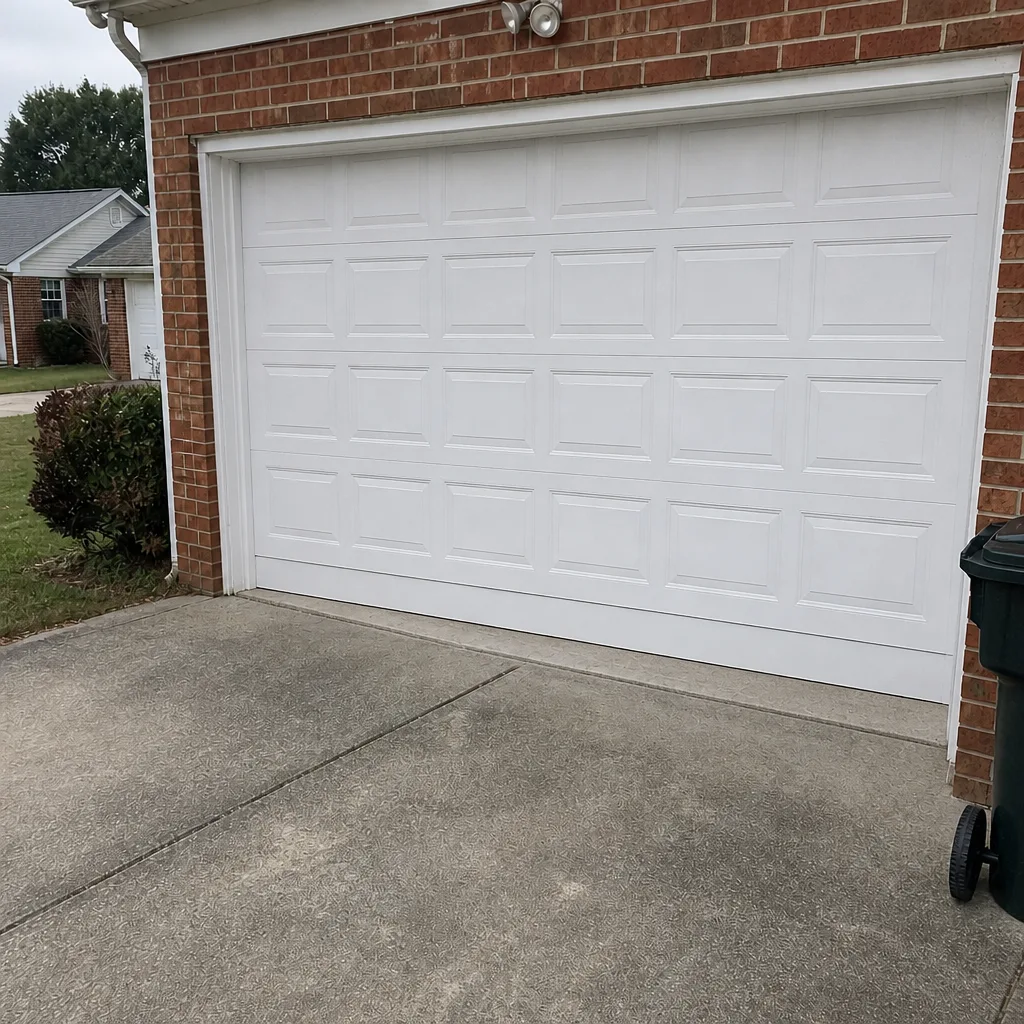
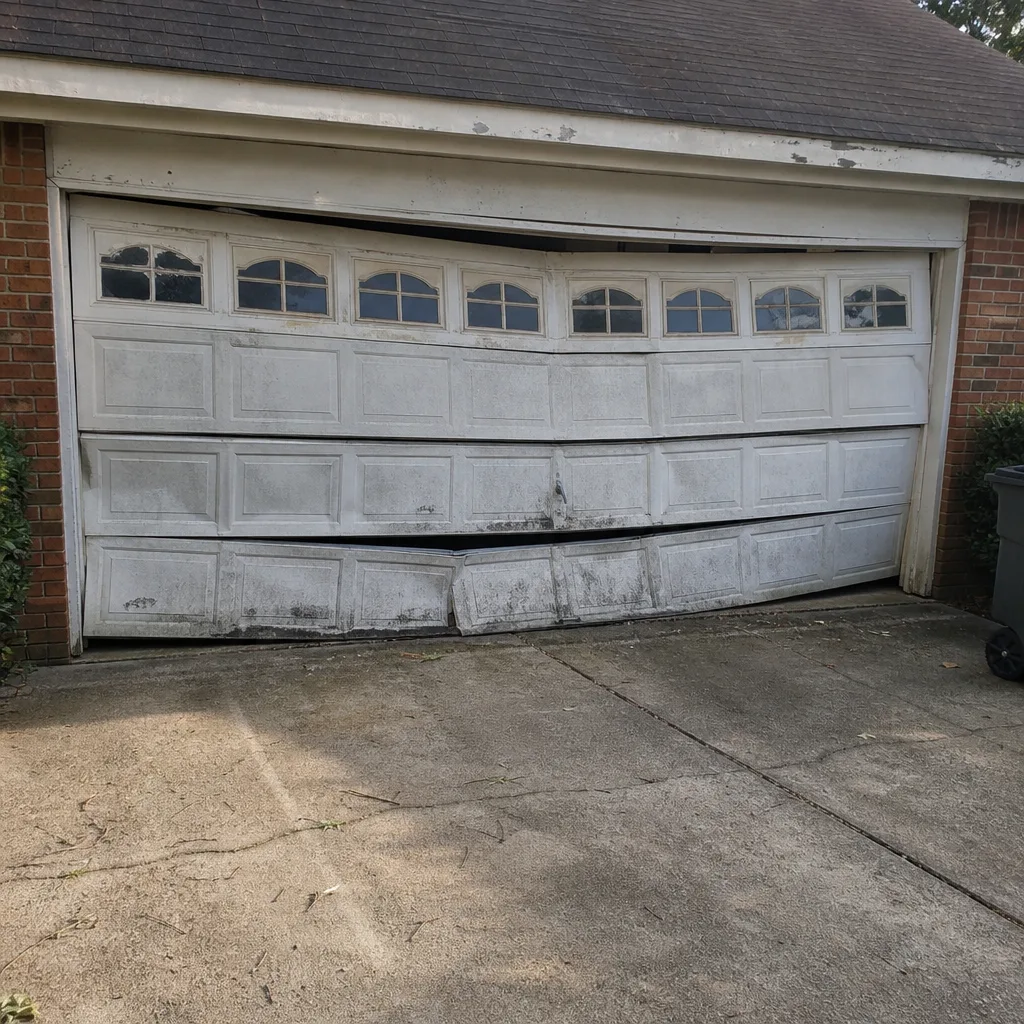
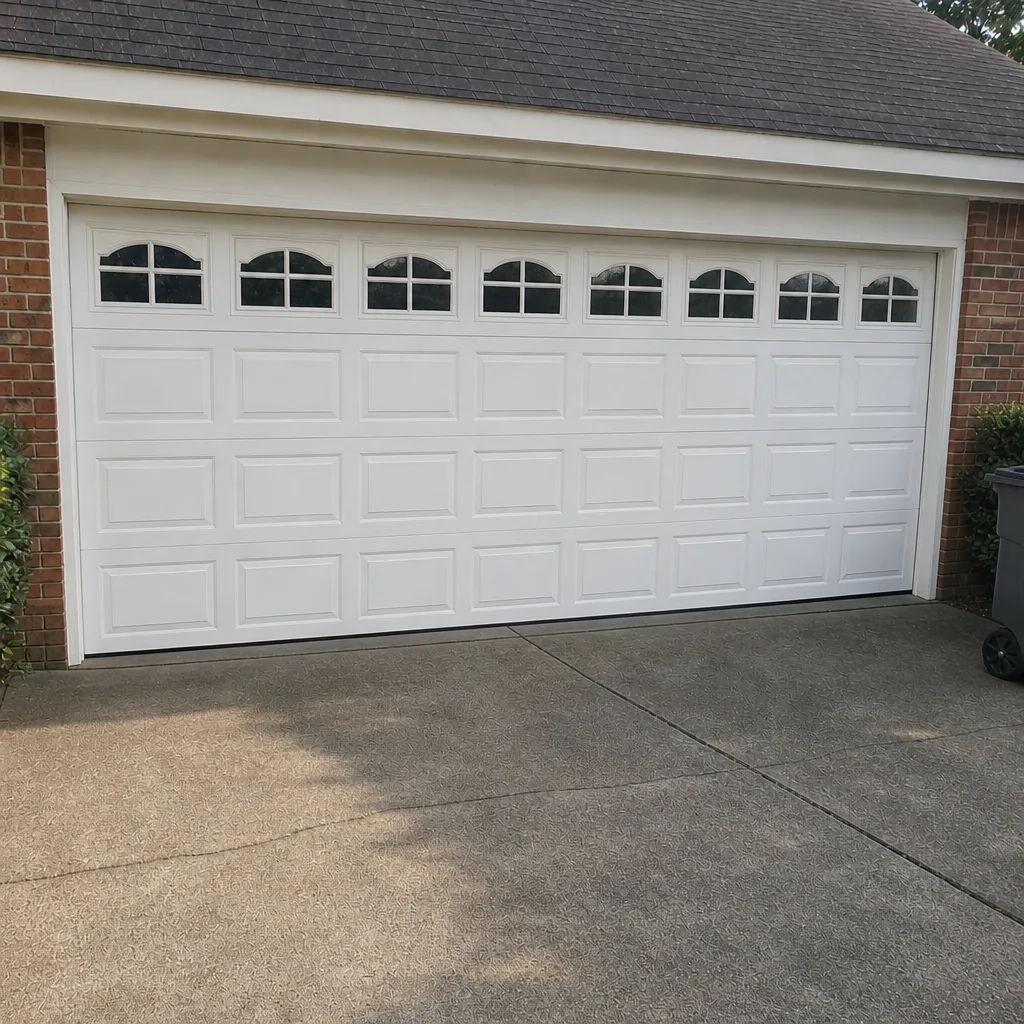
See the difference
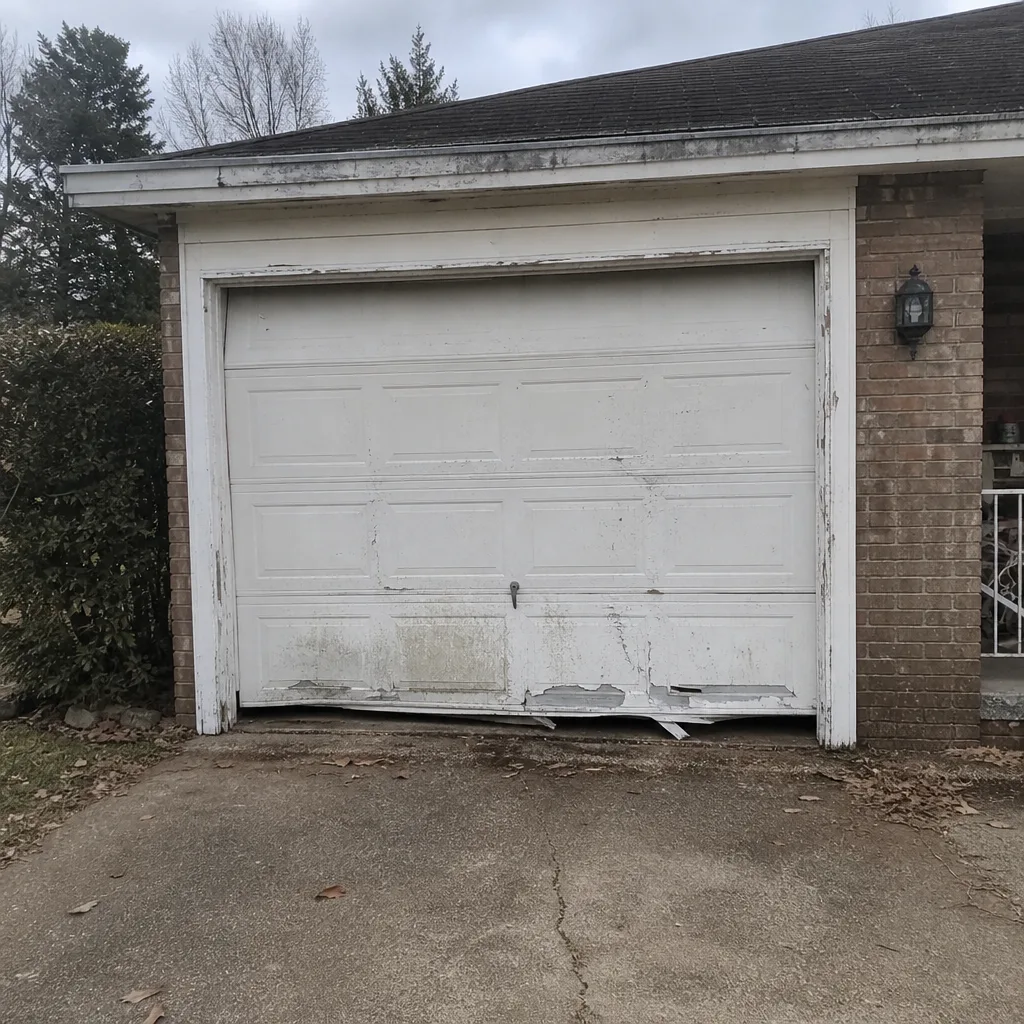 Before
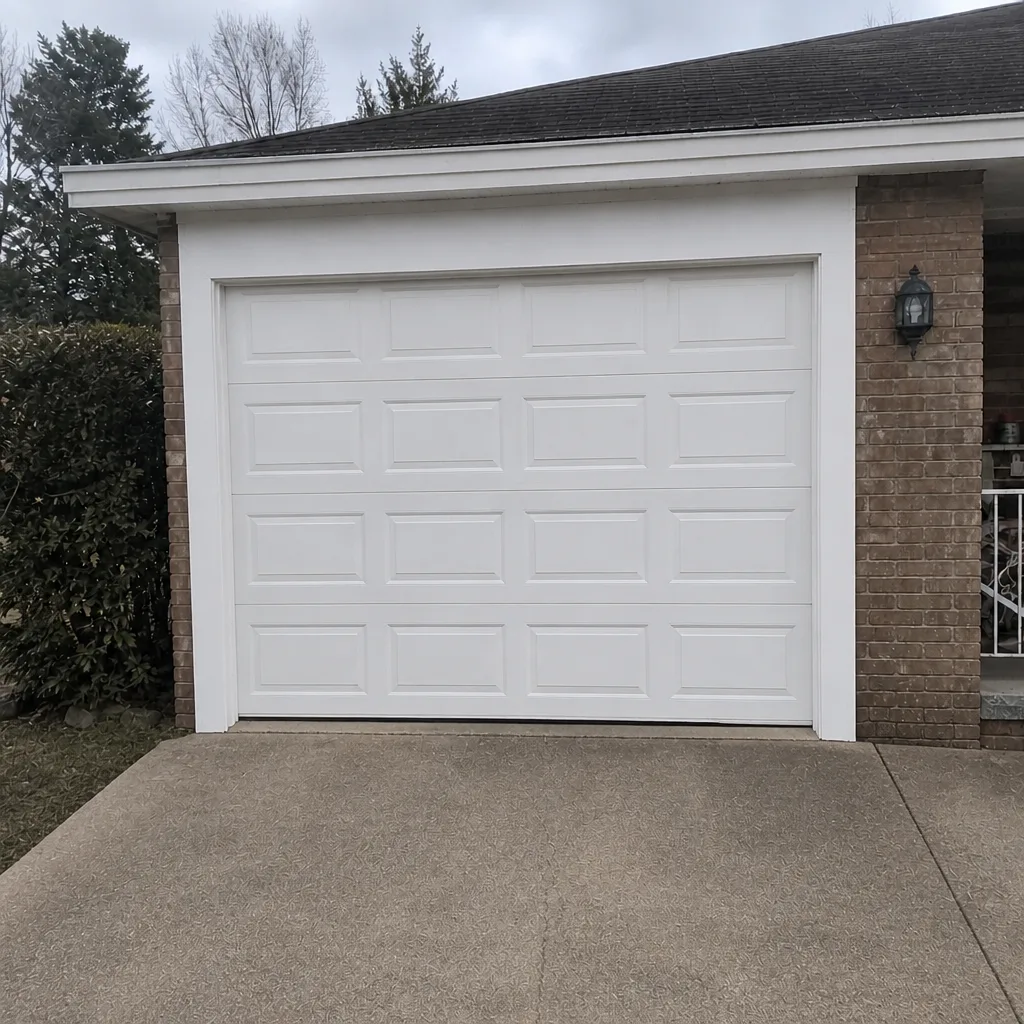 After
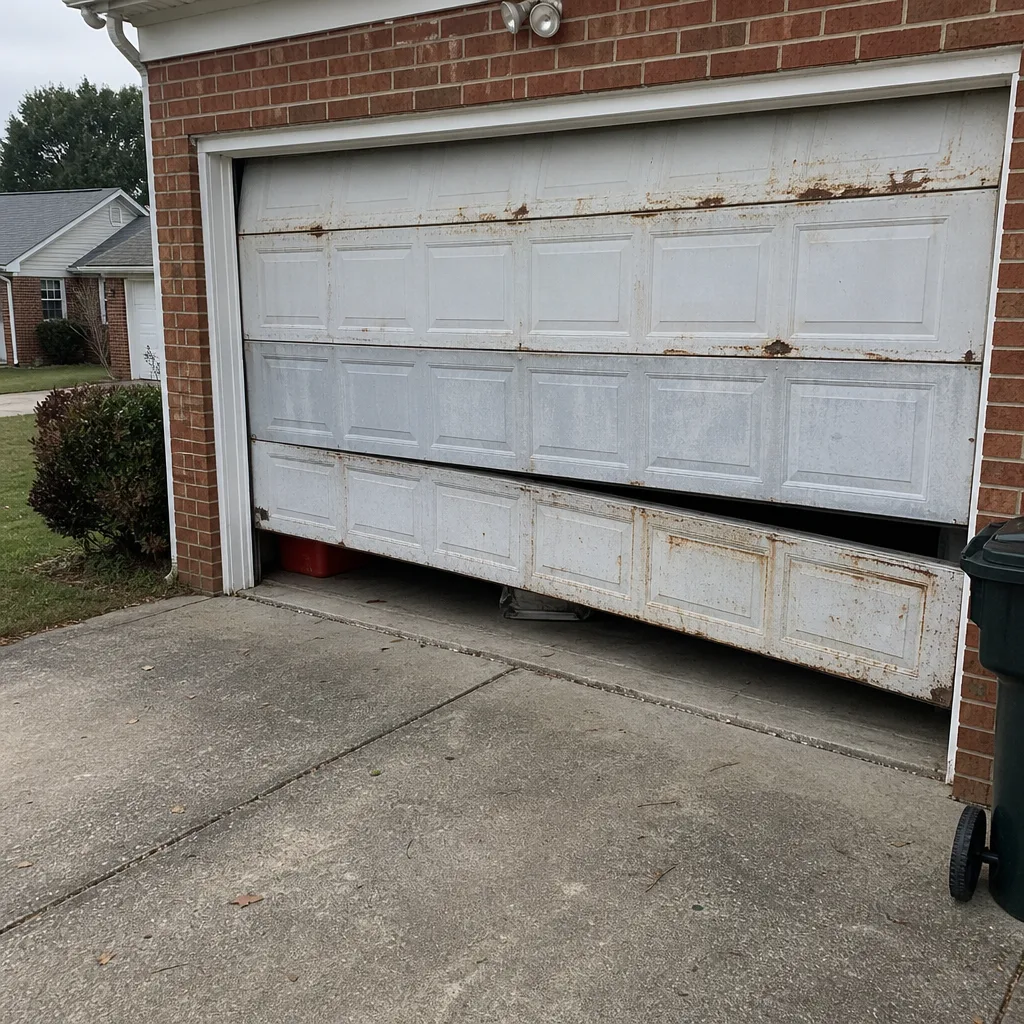 Before
 After
 Before
 After
Opener Checks That Save You a Repair Bill
Your opener is a motor, and like any motor it tells you when it’s struggling. The trick is catching the strain early, because an opener running against an unbalanced door or a stiff hinge is how you end up replacing a board instead of a hinge pin. Our advice here is shaped by how often we see one system’s problem blamed on the other.
- Test the safety reverse monthly, as covered above. It’s the highest-stakes check on the opener.
- Listen for changes. A new grinding, a rattle, or a door that slows on the way down points to a mechanical issue, not the motor itself. A technician can tell whether the problem is in the door, the opener, or the coupled part.
- Keep the opener’s force settings in mind. If the door starts to feel heavy, don’t increase the force setting to compensate. That’s a patch that masks the real problem, which is almost always the balance or the door hardware. Increasing the force to fix a door that’s getting heavier is how you burn out a motor.
- Check the manual disconnect. Once a season, pull the release and confirm the door moves freely by hand. That tells you the door itself isn’t the problem and the opener is doing the right work.
- If you have a smart or Wi-Fi opener, check the app’s error notifications after updates. Model-specific settings differ, so a brand-aware technician can quickly tell whether a fault is a sensor issue or a logic issue.
If you’ve checked the door and the issue is in the opener, that’s the point to involve a technician rather than continuing to press the force settings. We work on the most common opener brands in the market, including LiftMaster, Chamberlain and Genie, and in most cases we can tell you whether it’s a repair or a replacement before you make the call.
What a Professional Inspection Actually Covers
A professional inspection is not the same as the checks you do at home, and it’s worth knowing what you’re paying for. The main difference is that a technician has the tools and training to work with the high-tension parts safely, and can assess the system as a whole rather than one part at a time.
Here’s a short list of what a thorough inspection includes.
- Springs and cables. A technician checks for rust, sag, wear, and any signs of a pending failure. A spring that’s close to its limit gets spotted before it breaks.
- Track and alignment. The horizontal and vertical tracks get checked for bends or misalignment, which are hard to judge accurately by hand.
- Balance and travel. The technician runs the door through a full cycle, checks balance and travel limits, and listens for the mechanical sounds that reveal a problem before it gets loud.
- Sensors and safety reverse. Both systems get tested the same way you’d test them, but the technician can adjust the opener’s settings to bring them into spec if they fail.
- Opener and hardware. The opener, hinges, rollers, and hardware are checked for wear and loose fasteners, and any issues are adjusted safely.
For homeowners who can’t run the checks themselves or who’d rather have a technician inspect the whole door once, we offer a single-visit service that covers the door and the opener. Where the door is beyond adjustment, we can talk about garage door installation as an option, though repair-first is always our starting point. And because we’re a single-trade specialist and not a general handyman, we’re not going to hand your door off to another trade. Our technicians have up to 9 years of experience, and we service the brands you’ll find most often in Newport News driveways.
The price you’re quoted is agreed before any work starts, so you’re never surprised by the invoice. If you need emergency service because the door won’t open or close, call us and we’ll tell you what’s possible.
Common Mistakes to Avoid
- Lubricating on the once-a-year national standard. In Newport News, humid air arrives in force by early summer. Waiting until the annual pass means a full season of unprotected metal.
- Using WD-40 or axle grease instead of a proper door lubricant. The wrong product either strips the protective film or traps grit that wears rollers and hinges faster than no lubrication at all.
- Pushing on the door to test the sensors. That tests the reverse mechanism, not the photo-eyes. The correct test is interrupting the beam with the door closing.
- Increasing the opener’s force setting to compensate for a heavy door. That hides the real problem and shortens the life of the motor. A door that’s getting heavier has a balance issue.
- Trying to adjust a spring or cable yourself. This is the mistake with the worst consequence. Stored spring tension can leave no room for error, and it’s the most common way homeowners get hurt on a garage door repair.
- Ignoring rust on the springs because the door still works. A rusty spring hasn’t failed yet, but rust is the leading sign it will. Have a technician check it.
- Not testing the balance test after a move or a change in the garage. A door that was balanced a year ago can drift out of balance, so rerun the lift test once or twice a year.
When to Call a Professional
Some garage door problems are worth a call now. If you hear a loud bang from the overhead parts and the door stops moving, that’s a spring failure, and you shouldn’t run the opener again until it’s repaired. If the door comes down crooked or one side lags, stop using it: an unbalanced door strains the opener and can come off its tracks. If a cable has snapped or is hanging loose, don’t attempt to move the door yourself. If the door won’t close at all, or the photo-eye sensor won’t reset, a technician can diagnose the safety system the same day. And if you’re not comfortable running any of the checks in this guide, a single inspection covers the whole system.
Newport News Garage Door Repair Co offers free estimates in Newport News. We service the door and the opener, handle spring repair as a safety-priority job, and provide emergency service when the door won’t move. Call (855) 633-7752 to set up an appointment or get a free estimate.
Frequently Asked Questions
Every 3 to 4 months during the humid season is a sensible rhythm here, rather than the once-a-year advice written for dry climates. The humidity means metal parts lose protection faster, and a door that runs several times a day wears faster still. Wipe rust spots, apply a proper garage door lubricant, and have a technician check springs showing rust. Call (855) 633-7752 for a free estimate if you’d like us to look at the door.
No. Torsion and extension springs are under high tension, and adjusting or removing one can release that energy with serious force. It’s the most common way a homeowner gets hurt on a garage door repair, and it’s why this is one thing we’re firm about: spring repair belongs to a trained technician. If a spring is failing, call us rather than touch it. Estimates are free.
A door that suddenly feels heavy usually has a balance or spring problem, not an opener problem. The lift test will tell you: disconnect the opener, lift the door halfway and let go. If it drops instead of holding, the balance is off. Don’t keep running the opener against it. Call (855) 633-7752 so a technician can check it before it becomes a bigger repair.
Start the door closing and pass a hand or a broom across the beam between the two sensors as it descends. The door should reverse right away. Don’t push on the door to test the sensors, because that tests the reverse mechanism instead. If the door doesn’t reverse, clean the sensor lenses and check alignment before calling. If it still fails, call (855) 633-7752 for a free estimate on a sensor adjustment or repair.
It’s the humidity. Our summers keep the air moisture-heavy for months, and ungreased metal parts like springs and hinges are exposed to it every day. The rust starts small and moves slowly, so it helps to look monthly and lubricate on the shorter humid-season schedule. Rust is the earliest sign a spring will fail. If you see it, have a technician check the spring.
No. WD-40 and heavy axle grease aren’t the right products for garage door moving parts. Use a purpose-made garage door lubricant on the hinges, roller stems and springs, and keep it off the roller faces and track. A technician can tell you which parts on your door need it most and which brand-specific opener settings matter for your model. Call (855) 633-7752 for a free estimate.
The Bottom Line
Garage door maintenance in Newport News comes down to a short list of regular checks and one hard line. Lubricate on a schedule that fits the humidity, test the safety reverse and photo-eyes the right way, run the lift test a couple of times a year, and set your seasonal checkpoints by the humid season and the cold snap, not four equal seasons. Then draw the line clearly. Springs, cables and track adjustment are work for a trained technician, and they’re the tasks that cause real injury when attempted by hand.
One call covers the door and the opener here, whether you need ongoing maintenance, a repair after a failure, or a safety inspection before anything breaks. If the door won’t move, call and we’ll help you sort out what’s possible. For everything else, we’re glad to give you a free estimate. Newport News Garage Door Repair Co is your one call for the door and the opener, ready when the door won’t move. Call (855) 633-7752 today to schedule a free estimate or an appointment.
Written by the team at Newport News Garage Door Repair Co.