Last updated November 22, 2026
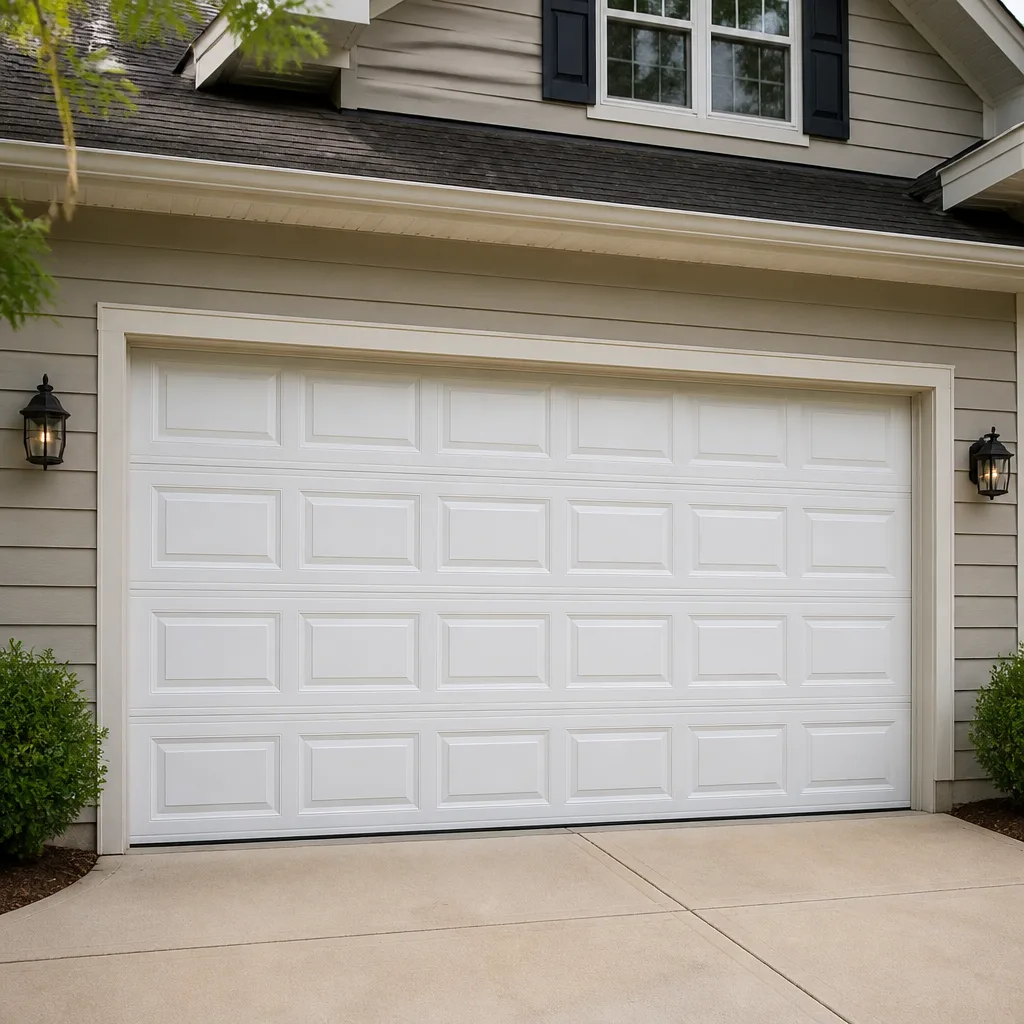 Raised-panel steel
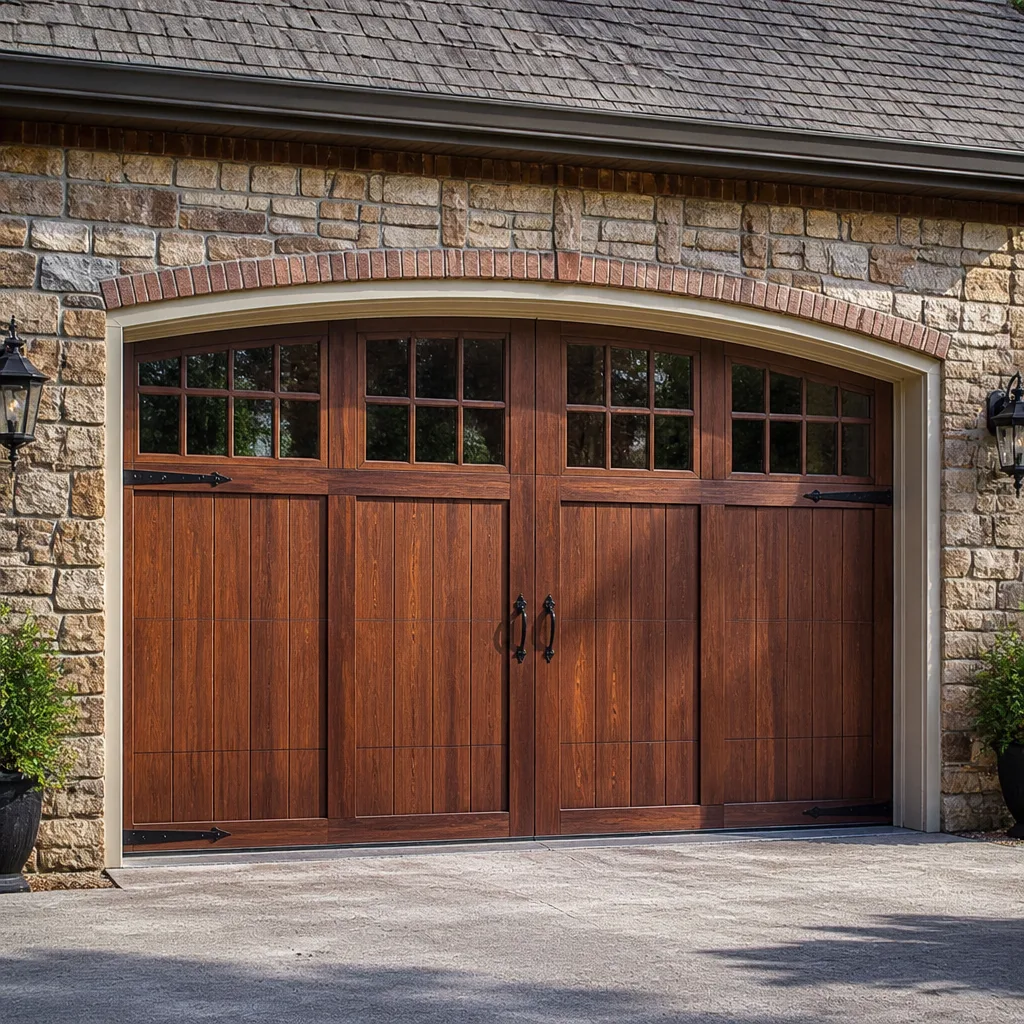 Carriage house
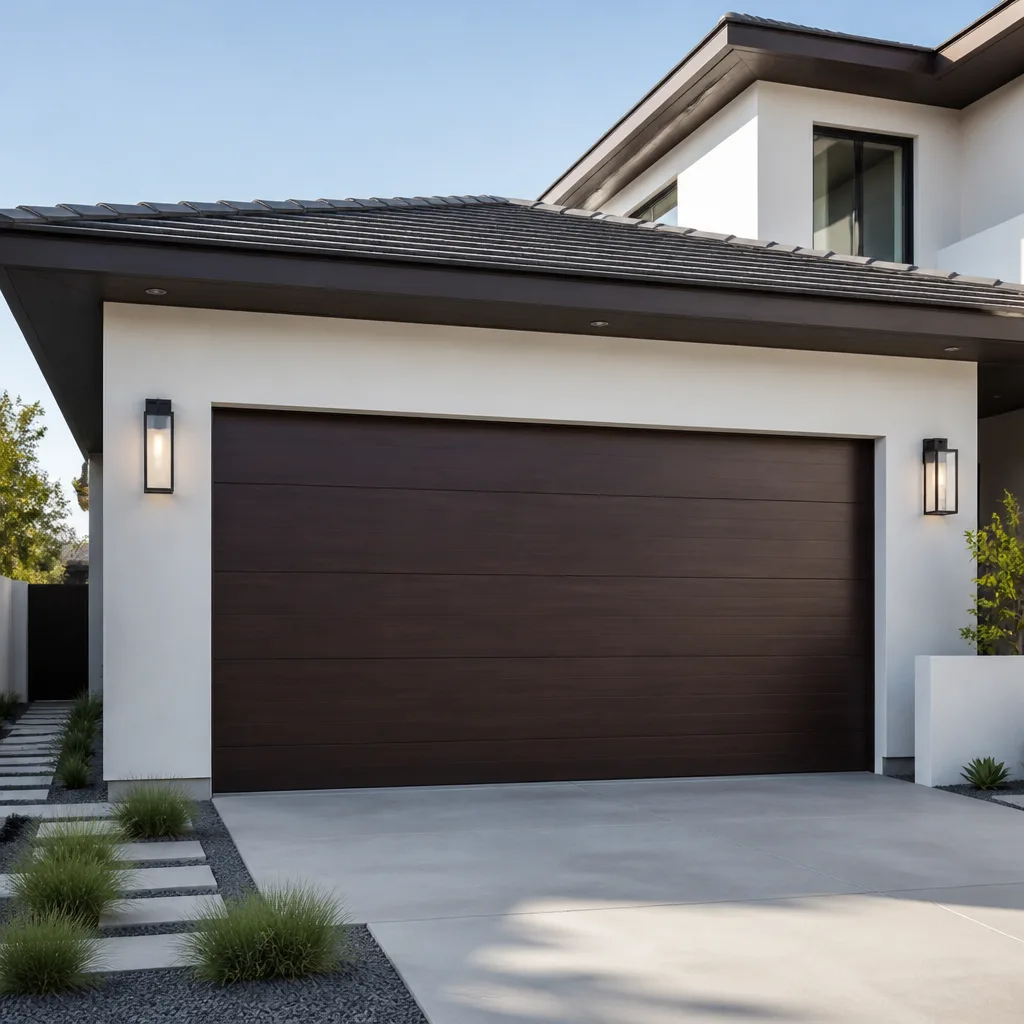 Modern flush
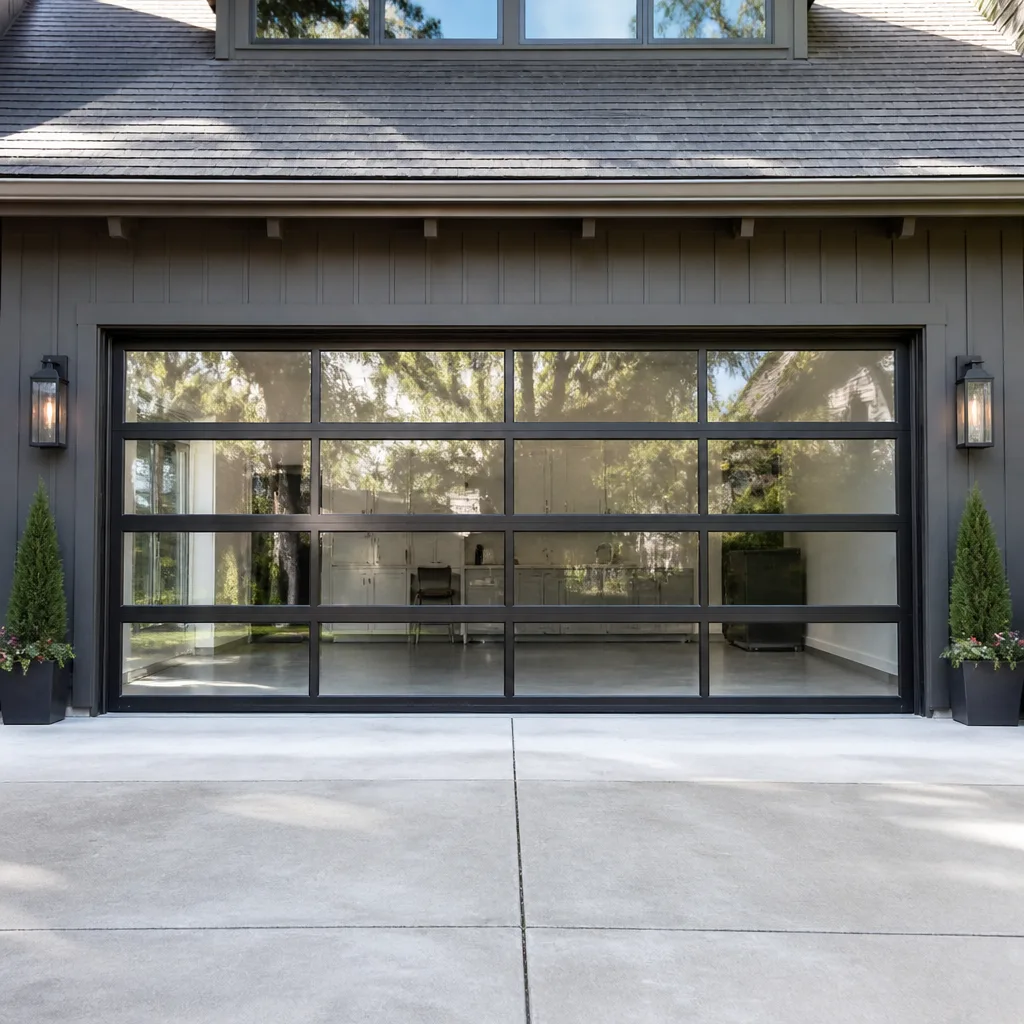 Full-view glass
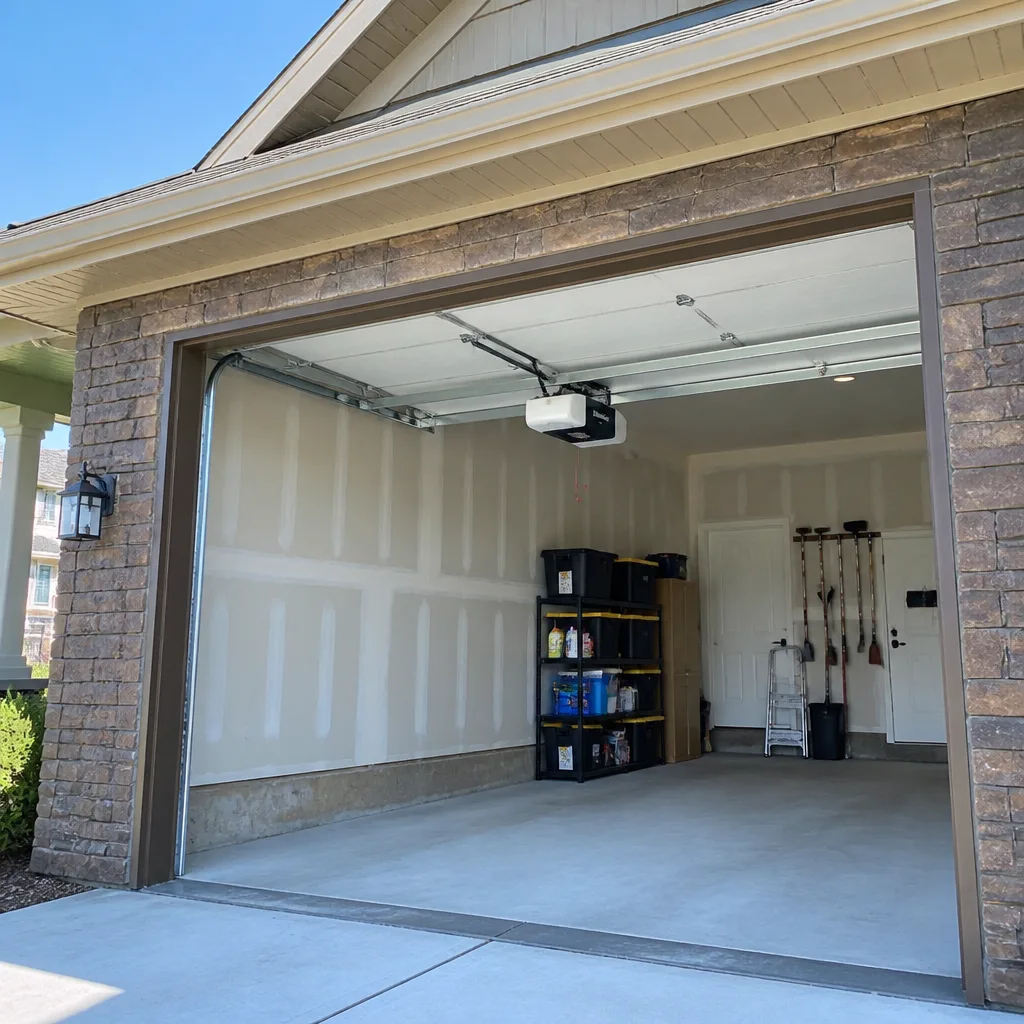 LiftMaster openers
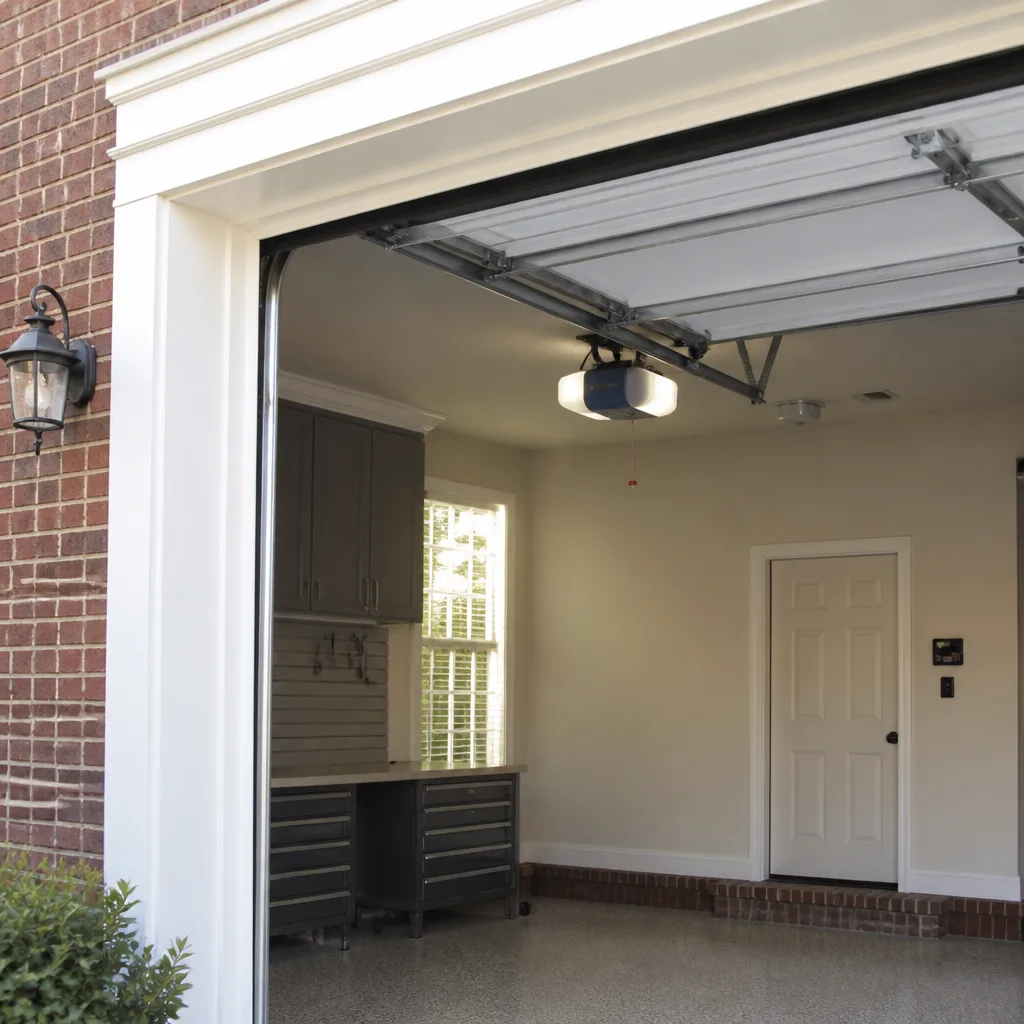 Chamberlain openers
Full 25-point door and opener safety check with every visit - springs, cables, rollers, tracks, and your LiftMaster or Chamberlain opener included
You get a price before we start. It does not change when the pro arrives.
Get your free estimateSeasonal Garage Door Care for Newport News: Year-Round Homeowner’s Guide
Most homeowners in Newport News assume January is when garage doors break. In our experience, the rush starts earlier – late October, when weeks of warm, humid air give way to the first genuinely cool night and every piece of metal in your door assembly contracts at once. That overnight shrink is when a bolt that has been quietly backing out since July finally lets go, a roller that wore flat in the heat starts grinding, and a track that drifted a fraction out of plumb starts to catch. The door worked all summer. Then suddenly it doesn’t. This guide lays out what to check and when across a Hampton Roads year, so you’re tightening hardware in October instead of calling for emergency service in December.
Quick Answer
Seasonal garage door care in Newport News follows a specific local rhythm: prep and seal before the humid summer peak in June, brace and secure ahead of hurricane season, tighten everything during the October-November contraction window, protect the bottom seal and avoid forcing the opener through winter freezes, then re-lubricate and realign in spring. Springs, cables, and the torsion system are safety-critical parts and belong to a trained technician – everything else on this list you can inspect yourself.
Styles & brands we work with
- Raised-panel steel
- Carriage house
- Modern flush
- Full-view glass
- LiftMaster openers
- Chamberlain openers
Table of Contents
- Why Newport News Seasons Hit Garage Doors Differently
- Pre-Summer Prep: Sealing and Testing Before the Humidity Peaks
- Hurricane Season and Wind Ratings: What Your Door Should Handle
- The October-November Contraction Window
- Winter: Weather Seals, Freezing Bottoms, and What Not to Force
- Spring Re-Lubrication and Realignment
- Brand-Specific Notes: LiftMaster, Chamberlain, Craftsman, and Raynor
- Your Twelve-Month Newport News Garage Door Calendar
Why Newport News Seasons Hit Garage Doors Differently
Newport News doesn’t hand you four equal seasons. What it gives you is a long, humid summer that runs from roughly May into September, a short winter with real freezing nights and occasional ice, and two shoulder seasons – spring and fall – that move fast and do most of the wear. Garage door hardware responds to that pattern in fairly predictable ways. Metal expands through the humid months, wood and composite panels absorb moisture, and lubricant gets thinner and migrates off the moving parts. Then the first cold snap reverses all of it within about 48 hours.
The humidity is the part people underestimate. A garage in a neighborhood like Hidenwood or Brentwood is not climate-controlled. It sits at whatever the outside air is doing, plus a little more, because the door faces the sun for part of the day. Over a summer, that cycle of damp mornings and hot afternoons works on hinges, bearings, and the bottom seal. Rubber seals go stiff and start to crack. Steel rollers develop flat spots. Hinges dry out.
Winter brings a different set of failures. Freezing nights harden the bottom weather seal against the concrete, and when the opener pulls a door that’s stuck to the floor, something in the system takes the strain – usually the opener’s drive gear or the door’s lift cables. That single habit causes a large share of the cold-weather repair calls we see.
The takeaway is simple: this is a climate where maintenance pays for itself in avoided repairs, and where the calendar matters more than the clock. If you time the work to the actual local pattern, you catch problems in the shoulder seasons, when they’re cheap and slow-moving, rather than in the middle of an August heat wave or the first hard freeze.
Pre-Summer Prep: Sealing and Testing Before the Humidity Peaks
Before June arrives, your goal is to get the door into a state the humidity can’t make worse. That means sealing the openings, treating the moving parts, and testing the whole system while conditions are still mild.
- Test the balance of the door by hand. Disconnect the opener – pull the release cord so the door is running free – then lift it halfway and let go. A balanced door stays put. If it drops or rises on its own, the spring tension is off and a technician needs to reset it. Don’t adjust springs yourself; the torsion system is under extreme tension.
- Check the bottom weather seal. Run your hand along the bottom edge where the rubber seal meets the floor. If you can see daylight or feel air moving through, the seal is failing, and once summer humidity arrives, that gap lets damp air and insects straight in.
- Look at the side and top seals. The vertical weatherstripping on the jambs and the top seal wear just as fast as the bottom and are often ignored. Cracked, stiff rubber should be replaced before the wet season, not after.
- Treat the moving parts. Lubricate hinges, rollers, and the torsion spring coils with a dedicated garage door lubricant – not WD-40, which is a water displacer rather than a lasting lubricant. A silicone- or lithium-based product stays put longer in heat.
- Clear the track. Wipe down the tracks with a damp cloth and check for debris, leaves, or grit that will grind through the summer. Don’t grease the tracks themselves – grease attracts dirt, and the tracks are meant to stay dry.
- Test the safety reverse. Place a piece of wood or a brick in the door’s path and close it. The door should reverse on contact. Test the photo-eye sensors by waving an object through the beam while the door is closing.
If your door is older, wood, or showing soft spots or bubbling paint, this is also the season to address it. Moisture damage that’s minor in May can mean a garage door repair call by August once the humidity has had a few months to work on it.
Hurricane Season and Wind Ratings: What Your Door Should Handle
Hurricane season in the Hampton Roads area runs from the start of June through the end of November, and the garage door is the largest opening in most homes. Wind-rated doors and proper bracing matter here, but it’s also a subject with a lot of confusion around it. Here’s how to think about it.
A garage door that isn’t rated or reinforced can fail under high wind pressure. When it does, the wind gets into the structure, and that’s when roof and wall damage tends to follow. A standard door built for a mild climate is not the same as a wind-rated door designed to resist that pressure.
Two things help:
- A wind-rated door with the right rating for your area. Door manufacturers test and label doors to specific wind-load ratings. If you’re replacing a door, tell your installer you want a wind-rated product appropriate for the local wind zone, and ask for the manufacturer’s documentation. If you’re not sure what your current door is rated for, a technician can identify the model and tell you.
- Horizontal bracing. Horizontal reinforcement – steel struts or braces across the inside of the door panels – adds rigidity and helps the door resist deflection. On an existing door, this can often be added without a full replacement. It’s not a substitute for a rated door in a high-wind event, but it’s a meaningful improvement for a door that currently has no reinforcement at all.
Ahead of a named storm, there’s a short pre-storm list worth following: disconnect the opener and lock the door manually if your model allows, check that the door is fully seated against the floor, and clear anything loose from inside the garage that could become a projectile. Don’t tape the door or force it against wind pressure.
If your door is coming due for replacement and wind performance matters to you, garage door installation is the moment to get it right – the door is specified and ordered up front, with a written quote before anything is manufactured.
The October-November Contraction Window
This is the most important maintenance window of the Newport News year, and it’s the one most homeowners skip. Everything that expanded through the summer contracts as temperatures fall, usually within a few weeks. Bolts that loosened quietly through the heat show themselves. Rollers that developed flat spots start to thump. Tracks that drifted slightly out of plumb start binding.
Here’s what to check in October and November:
- Walk the door and listen. Open and close it slowly and pay attention to the sound. A rhythmic thump points to a worn roller. A squeal points to dry hinges or a dry torsion tube. A grinding noise from the opener usually means the drive gear or the rail.
- Check every hinge bolt. Use a socket or wrench – not a screwdriver – and check the bolts that hold the hinges to the panels and the panels to each other. Snug, not overtightened. Loose hinge bolts are one of the most common causes of panel misalignment.
- Inspect the rollers. Steel rollers that are worn flat should be replaced. Nylon rollers hold up better in temperature swings, and if your door still has the original steel rollers, this is a good time to have them swapped.
- Look at the vertical track alignment. Stand inside the garage and sight up each vertical track. They should be straight and parallel. A slight bend at the bottom, where the door meets the floor, is common and easy to miss.
- Test the opener’s force and travel limits. If the opener struggles to lift the door in changing temperatures, its force setting may be compensating for a door that’s out of balance rather than for the cold. A technician can check the balance and set the opener properly.
- Re-check the weather seals. Fall is the best time to replace a bottom seal or side strips, before the freezing nights harden the rubber against the floor.
This window is also the best time of year to schedule a garage door opener repair if you’ve noticed the opener straining. The problem is usually simpler to diagnose when the door is running normally, before the cold starts adding friction.
Winter: Weather Seals, Freezing Bottoms, and What Not to Force
Newport News winters are short, but they include real freezing nights and the occasional ice event, and that’s enough to cause specific failures. The main one: your door’s bottom seal freezes to the concrete floor, and the opener tries to pull it free anyway.
What happens next depends on the door. On a chain- or belt-drive opener, the drive gear or the belt can take the strain. On a door with older cables, the force can stretch or damage them. On a torsion system, the springs may slip. None of that is a repair you want to schedule in the middle of a cold snap.
Here’s the winter protocol:
- Break the seal by hand if it’s stuck. If you suspect the door is frozen to the floor, disconnect the opener first, then gently rock the door by hand from the bottom panel to break the ice bond before reconnecting. Don’t use the opener as a crowbar.
- Keep the bottom seal pliable. A silicone-based seal treatment before the first freeze keeps the rubber softer and less likely to stick. Replace any bottom seal that’s already cracked or grooved – a worn seal freezes faster.
- Clear snow and ice from the threshold. Ice packed under the door is one of the biggest causes of stuck doors in winter. A quick shovel pass on freezing mornings saves a repair later.
- Watch for condensation inside the garage. In a humid climate, the first cold nights can cause condensation on the inside of a steel door, which then drips onto the tracks and freezes. A slightly cracked window or a dehumidifier helps.
- Don’t change the opener’s force setting to compensate for winter. If the door needs more force in the cold, that’s a symptom – of a tight seal, dry hinges, or a door that’s out of balance – not a setting to raise.
If winter weather has already caused a problem – the door won’t open, won’t close, or has come off its tracks – our emergency garage door service exists for exactly that. Springs, cables, and a door off its tracks are all situations to stop operating the door and call.
Spring Re-Lubrication and Realignment
By the time spring arrives in Newport News, your door has been through a long humid summer, a short winter with freezing nights, and a lot of temperature swings. That’s when lubricant has thinned and migrated, seals have hardened, and the tracks may have shifted a fraction. Spring is the season to put it all back right.
- Clean before you lubricate. Wipe the old lubricant and dirt off the hinges, rollers, and torsion tube with a rag. New lubricant on top of grit just holds grit.
- Use a garage door-specific lubricant. A silicone-based or white lithium spray, applied to the hinge pivot points, roller bearings, and the torsion spring coils. Not WD-40, not motor oil, not grease on the tracks.
- Spray the torsion spring coils lightly. A thin coat on the coils keeps the spring from rusting and reduces friction between the coils as the spring winds and unwinds. Don’t spray so much that it drips onto the door panels.
- Re-check track alignment. Same test as the fall: sight up each vertical track and check for bends, especially near the bottom.
- Re-test balance and safety reverse. Both should be checked at least twice a year, and spring is one of those times. If the door doesn’t reverse on contact or the sensors don’t respond, stop using the door until it’s fixed.
- Check the opener’s battery backup if it has one. Modern openers from LiftMaster and Chamberlain often include a battery backup. Test it once a year by unplugging the opener and running the door.
If your door has been noisy all winter, spring is also a good time to have a technician take a look. A noise that’s been there for months is usually a worn bearing or roller, not a door that needs replacement.
Brand-Specific Notes: LiftMaster, Chamberlain, Craftsman, and Raynor
Garage door systems don’t fail the same way across brands, and knowing the brand tells a technician where to look first. We work on equipment from LiftMaster, Chamberlain, Genie, Clopay, Amarr, Wayne Dalton, Craftsman, and Raynor, and the brand-specific behaviors are part of what makes a proper diagnosis faster.
- LiftMaster openers often include MyQ connectivity and battery backup. Seasonal checks should include the battery and the Wi-Fi status, especially after a power outage or a router change.
- Chamberlain openers share much of the technology with LiftMaster and have similar seasonal touchpoints – battery backup, safety reverse, and force settings that shouldn’t be raised to compensate for a stiff door.
- Craftsman openers, many of them older models still in service, often have a force adjustment that needs periodic checking. If the door doesn’t reverse on contact, stop operating it until a technician checks it.
- Raynor doors are common on older homes, and their hinge and roller configurations can differ from the more generic hardware people are used to. A worn Raynor hinge is not always a one-size-fits-all replacement.
The point isn’t brand loyalty. It’s that a technician who works on these systems regularly recognizes the difference between a LiftMaster force-setting problem and a door balance problem, and doesn’t waste your time guessing. One visit can cover both the door and the opener when the systems are compatible, which is often how the job is most efficient.
Your Twelve-Month Newport News Garage Door Calendar
Here’s the whole year on one page. Use it as a checklist, and if you’re not sure what you’re looking at, have a technician walk the door with you.
| Month | Focus | What to Do |
|---|---|---|
| March-April | Spring reset | Clean and lubricate, check balance, test safety reverse, replace winter-worn seals |
| May | Pre-summer prep | Check all weather seals, clear tracks, test sensors, address moisture damage |
| June-August | Hurricane season begins | Confirm wind-rated door or bracing, clear garage of projectiles before named storms |
| September | Late-summer check | Listen for new noises, re-check hinges as heat peaks |
| October-November | Contraction window | Tighten hinge bolts, inspect rollers, check track alignment, replace bottom seal |
| December-February | Freeze protection | Never force a frozen door, clear ice from threshold, keep bottom seal pliable |
The rest of the year, a quick monthly walk-around – listen to the door, look at the seals, test the reverse – catches most problems before they turn into a repair.
Common Mistakes to Avoid
- Forcing a frozen door with the opener. The opener will win the battle against the ice and lose the war against its own drive gear. Disconnect first, break the ice by hand, then reconnect.
- Lubricating the tracks. The tracks are supposed to be dry. Grease attracts grit, and grit grinds the rollers. Lubricate the rollers and hinges, not the tracks.
- Raising the opener’s force setting to compensate for a stiff door. A stiff door is telling you something – a dried-out hinge, a worn roller, a seal dragging, or a door out of balance. Raising the force just hides the symptom until something breaks.
- Skipping the October check. In this climate, the contraction window is where most failures get set up. Tightening hardware in late fall is the single highest-value hour you’ll spend on the door all year.
- Ignoring a bottom seal that’s cracked or grooved. A worn seal lets in moisture, insects, and cold air, and in winter it freezes to the floor faster than a sound one.
- Trying to adjust the torsion spring yourself. Torsion springs are under extreme tension and can cause serious injury. Balance checks by hand are fine; spring adjustment is a job for a trained technician.
- Replacing the door when the opener is the problem. Many doors people think are worn out are just out of balance, and a balance adjustment or a new set of rollers fixes them.
See the difference
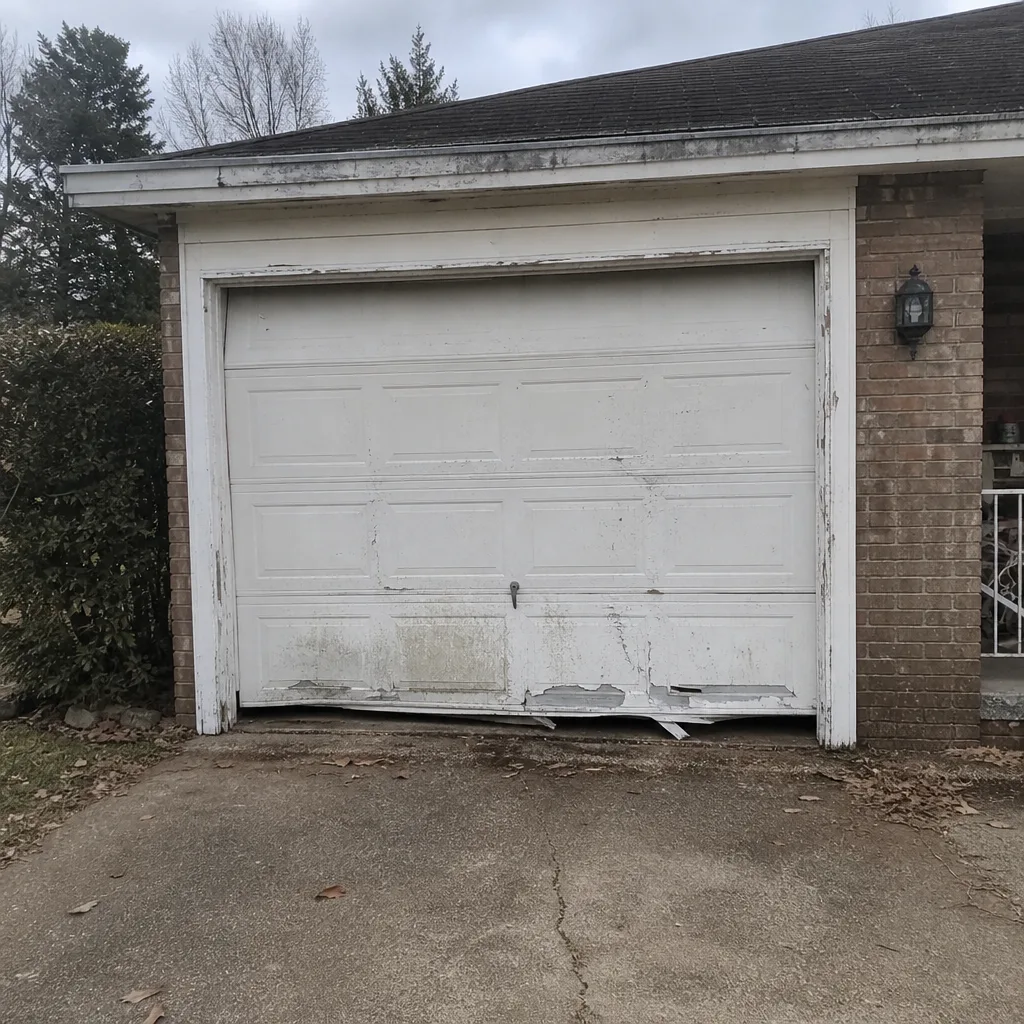 Before
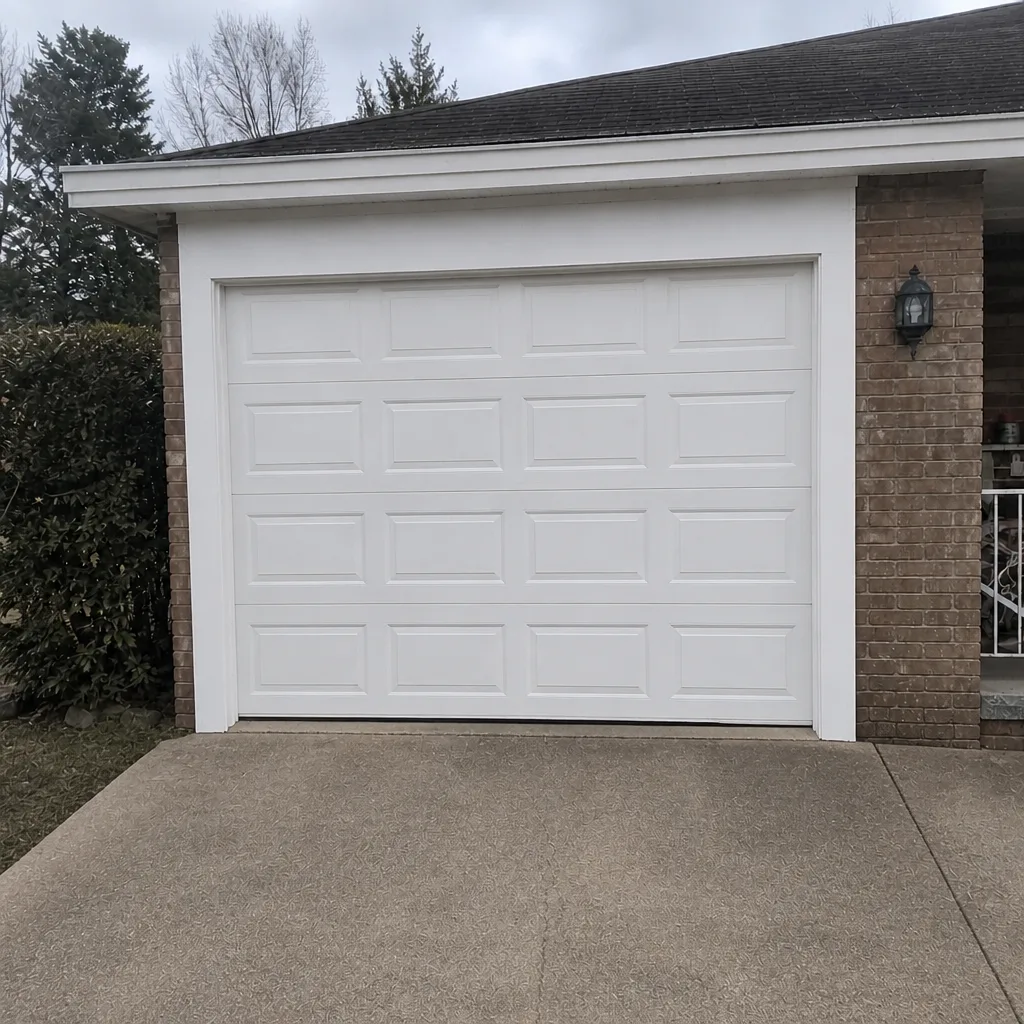 After
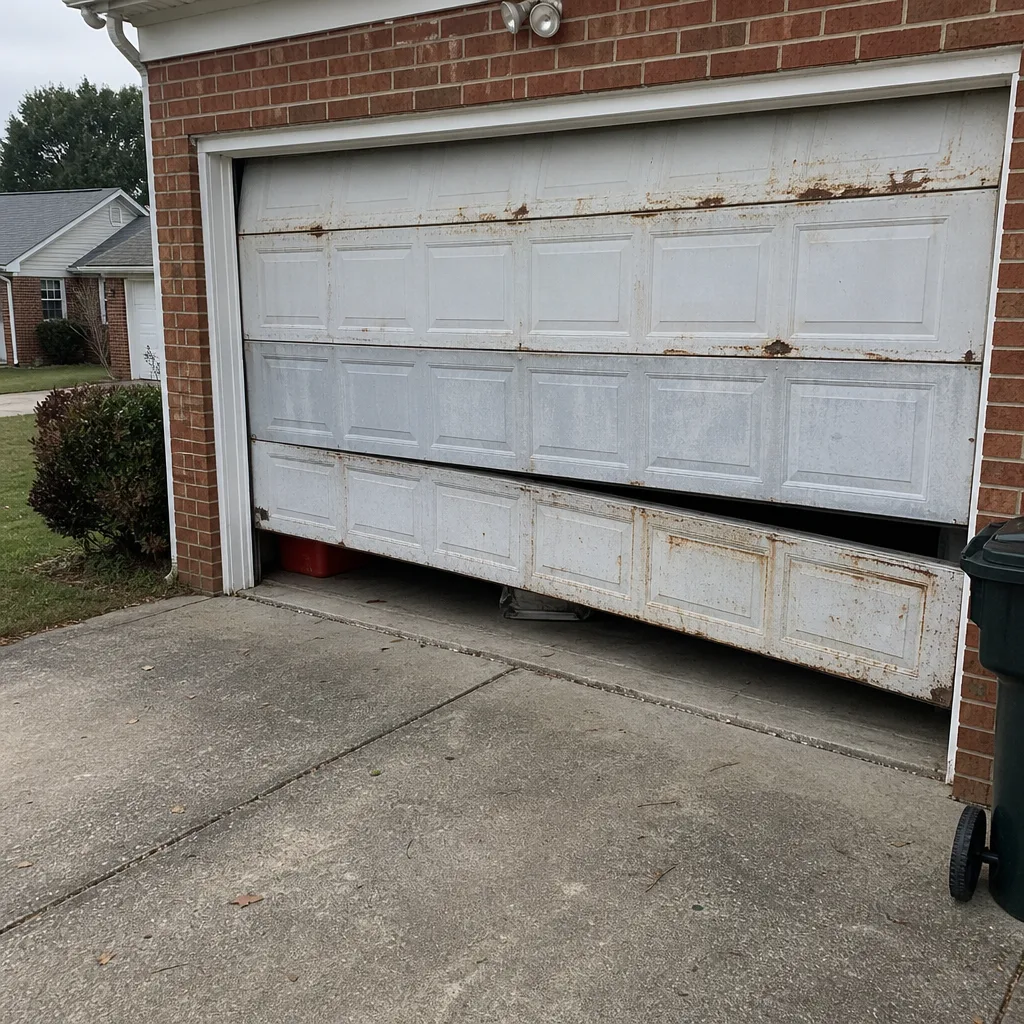 Before
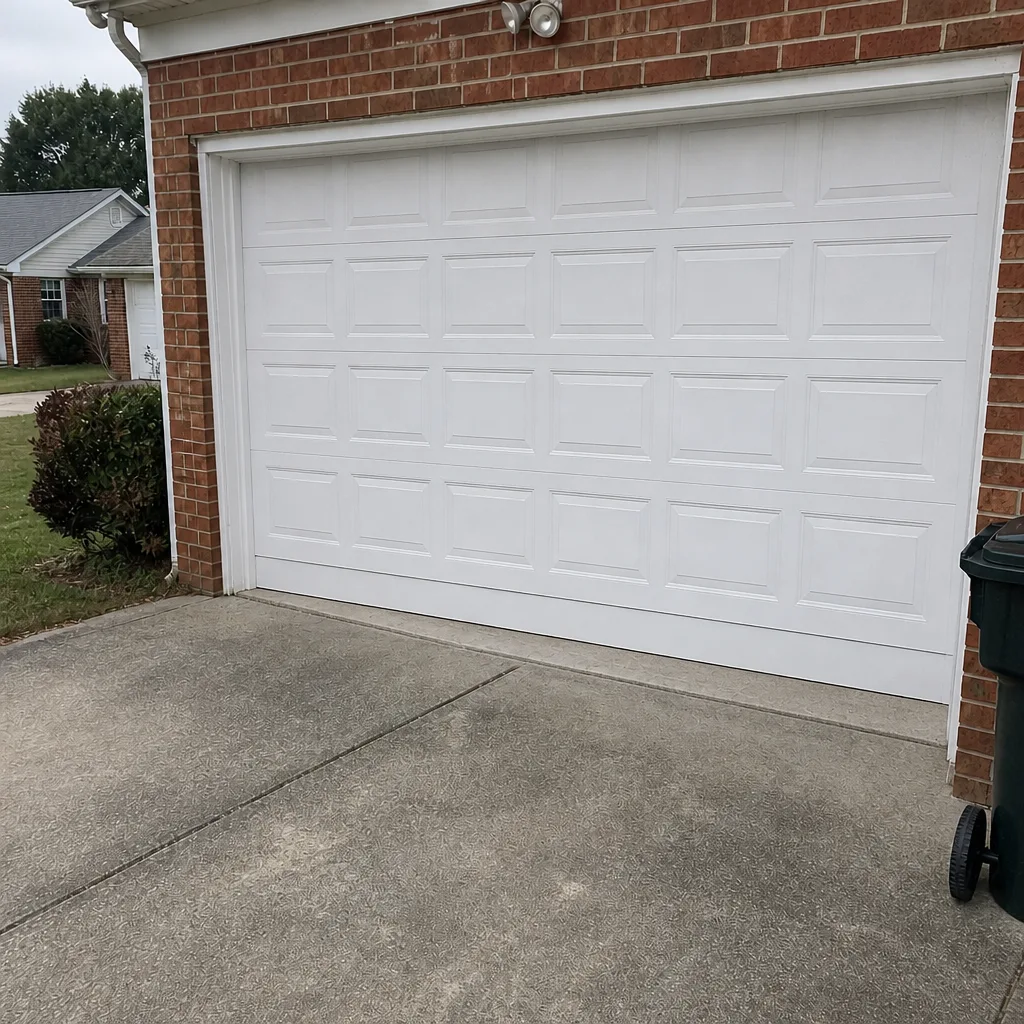 After
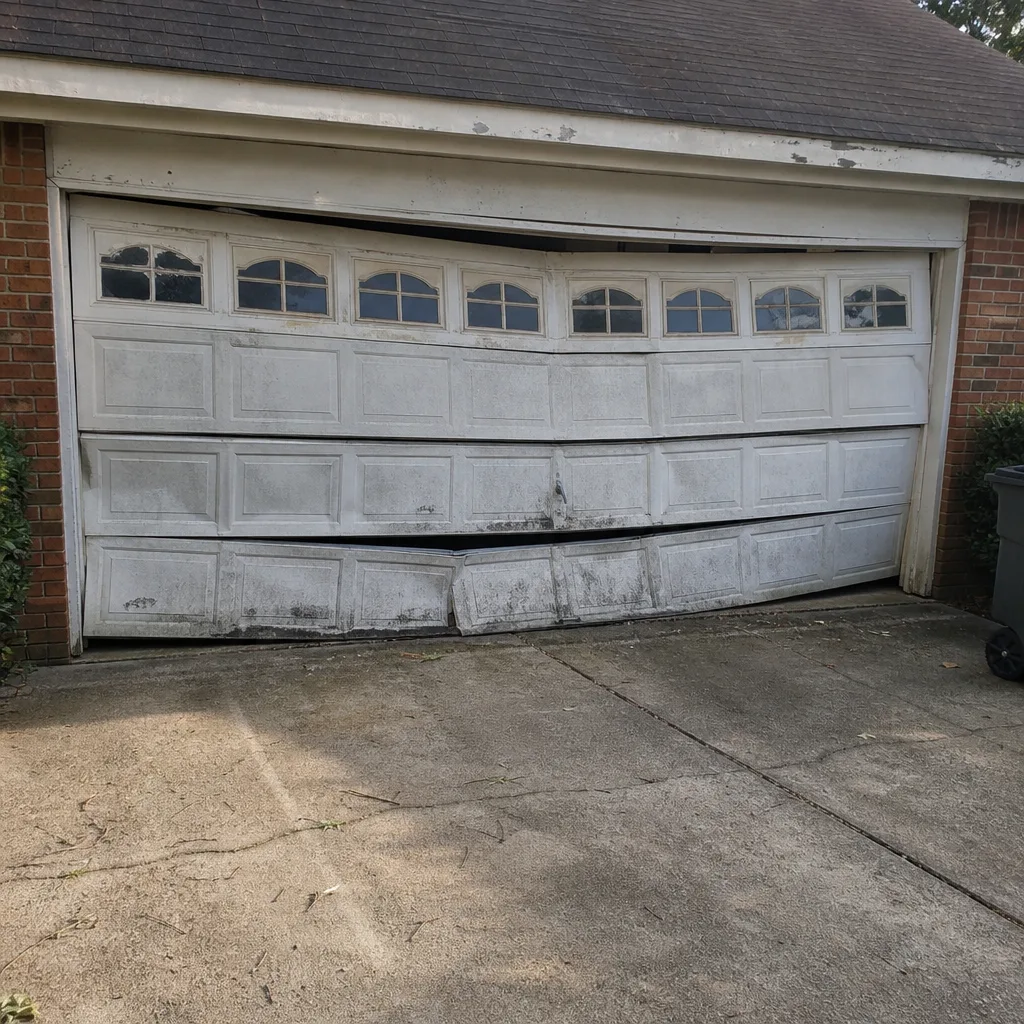 Before
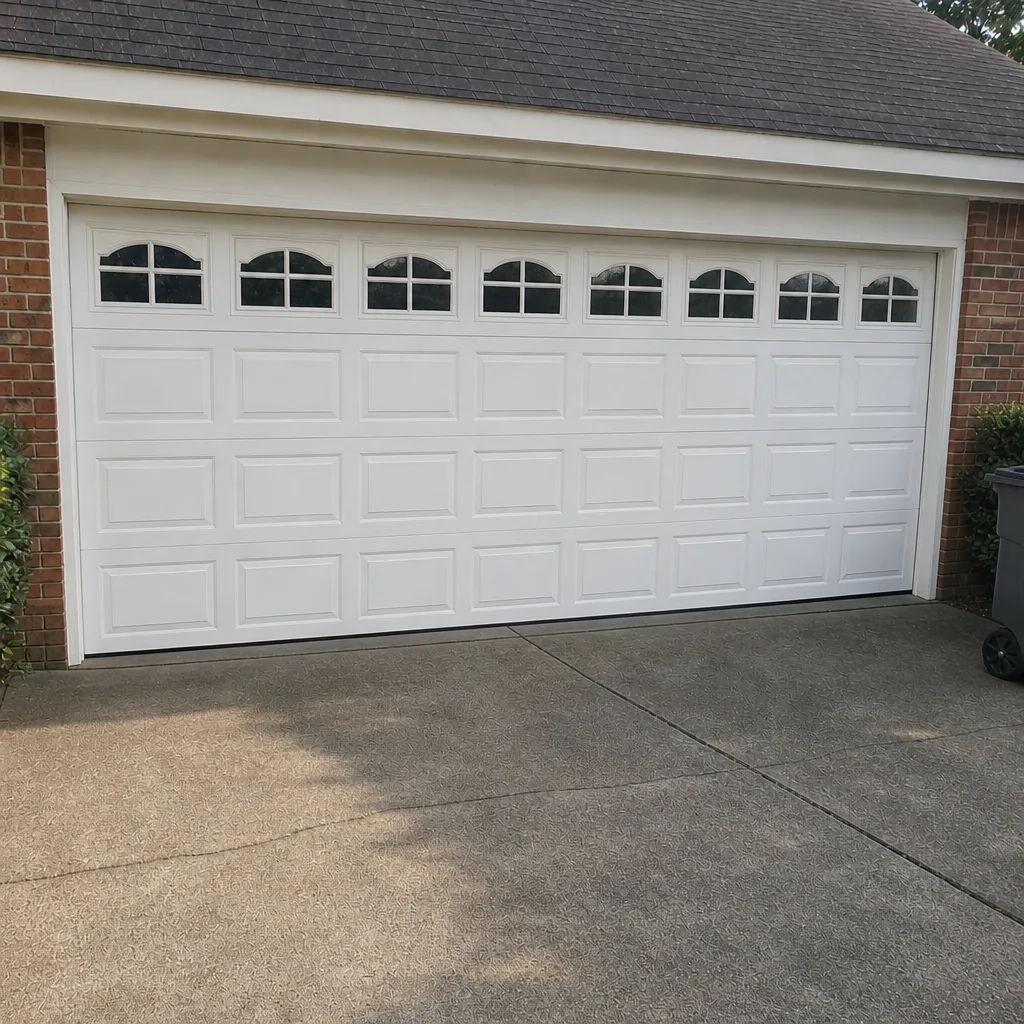 After
When to Call a Professional
Some things you can check and maintain yourself. Others should stop right there and go to a technician. Call us if a spring has snapped or looks visibly broken, if the door is off its tracks or hanging unevenly, if the cables are frayed or slack, if the opener runs but the door doesn’t move, if the door reverses or stops unexpectedly, or if you’ve noticed any part of the system that looks bent, cracked, or loose in a way tightening doesn’t fix. Springs, cables, and torsion work are high-tension and safety-critical – the same goes for anything involving the door’s framing or a wind-rated upgrade. Newport News Garage Door Repair Co offers free estimates in Newport News, and our technicians have up to 9 years of experience working on doors and openers from the major brands. Call (855) 633-7752.
Frequently Asked Questions
Twice a year is the standard: once in spring for lubrication and realignment, and once in the October-November contraction window for tightening and inspection. In this climate, those two visits catch the problems the humidity and the freeze-thaw cycle set up before they become repairs. If your door gets heavy daily use, a third check in midsummer is worthwhile.
Metal contracts as temperatures drop, and hardware that had loosened gradually through the summer suddenly has clearance. That’s why the fall is when worn rollers, dry hinges, and loose bolts announce themselves. The noise is usually fixable with tightening and lubrication if you catch it early. Call (855) 633-7752 for a free estimate if it’s been going on for more than a week or two.
That depends on your exposure and your home, and the right answer comes from a professional who can look at your door and its installation. A wind-rated door with the correct manufacturer’s rating, plus horizontal bracing where appropriate, gives you real protection in a high-wind event. If you’re replacing a door, ask your installer to specify a wind-rated product for the local wind zone and provide the documentation.
You can lubricate the hinges, rollers, and torsion spring coils yourself with a garage door-specific product. What you shouldn’t do is adjust the torsion springs, cables, or track alignment – those are the parts that cause injury. If you’re not sure what to lubricate and what to leave alone, we can walk you through it. Call (855) 633-7752.
Disconnect the opener and gently rock the door by hand from the bottom panel to break the ice bond before reconnecting. Then clear the ice and snow from the threshold and treat the bottom seal with a silicone product to keep it pliable. If the opener has already tried to pull the frozen door and something sounds wrong, stop using the door and call us for emergency garage door service.
No. We quote and agree the price with you in writing before any work starts. If a technician finds something during the job that changes the scope, they’ll stop and discuss it with you first. The written quote is what you pay. Call (855) 633-7752 for a free estimate.
The Bottom Line
Garage door care in Newport News isn’t about four seasons – it’s about a long humid summer, a short icy winter, and two fast shoulder seasons that do the real damage. Time your maintenance to that rhythm: seal and test before June, brace for hurricane season, tighten everything in October and November, protect the bottom seal through the freezes, and re-lubricate and realign in spring. Everything you can inspect and lubricate yourself on the list is worth doing. Springs, cables, torsion work, tracks, and anything that has come loose or stopped moving belongs to a trained technician. If you’d rather have someone walk the door with you, Newport News Garage Door Repair Co is here for it.
When the door needs a hand, or when it won’t move at all, call us at (855) 633-7752 for a free estimate. Our technicians have up to 9 years of experience, and we work on the door and the opener in one visit across the major brands.
Written by the team at Newport News Garage Door Repair Co.